
Last updated November 14, 2026
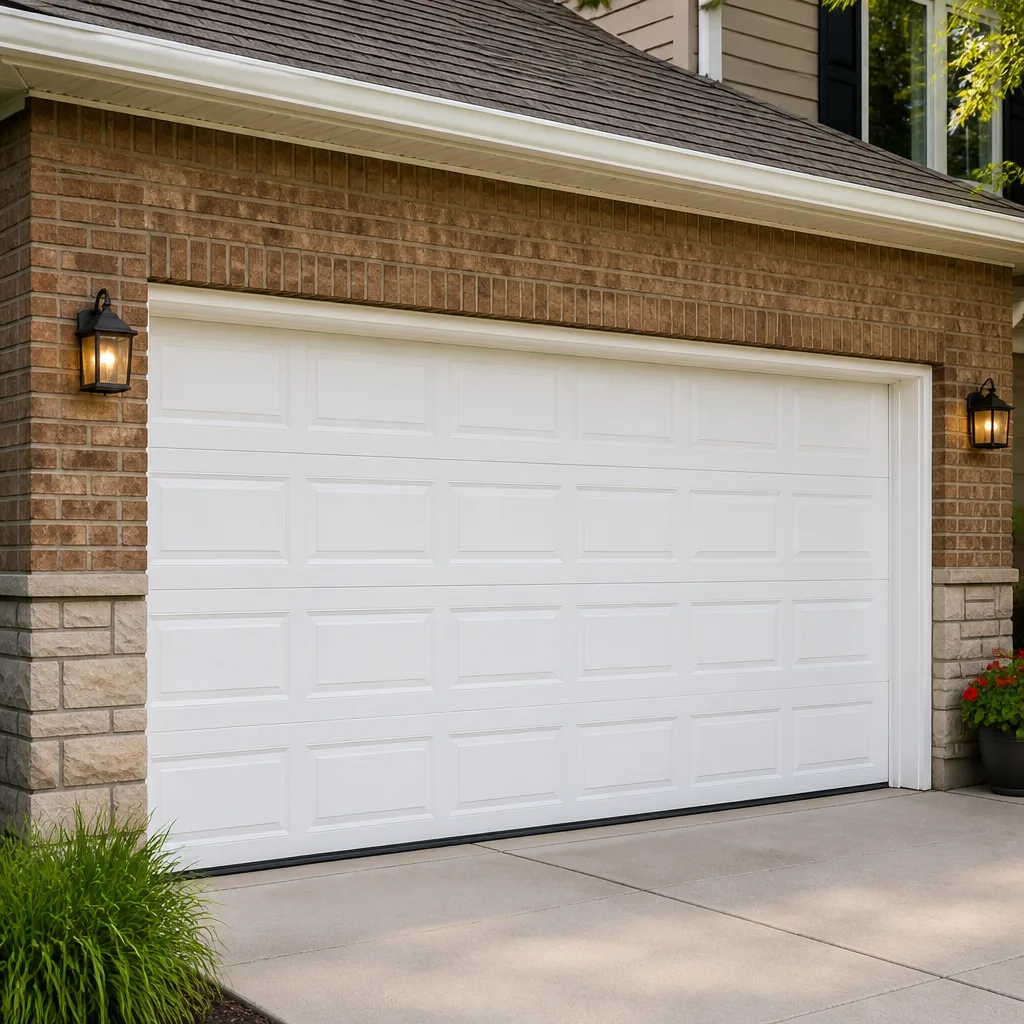 Raised-panel steel
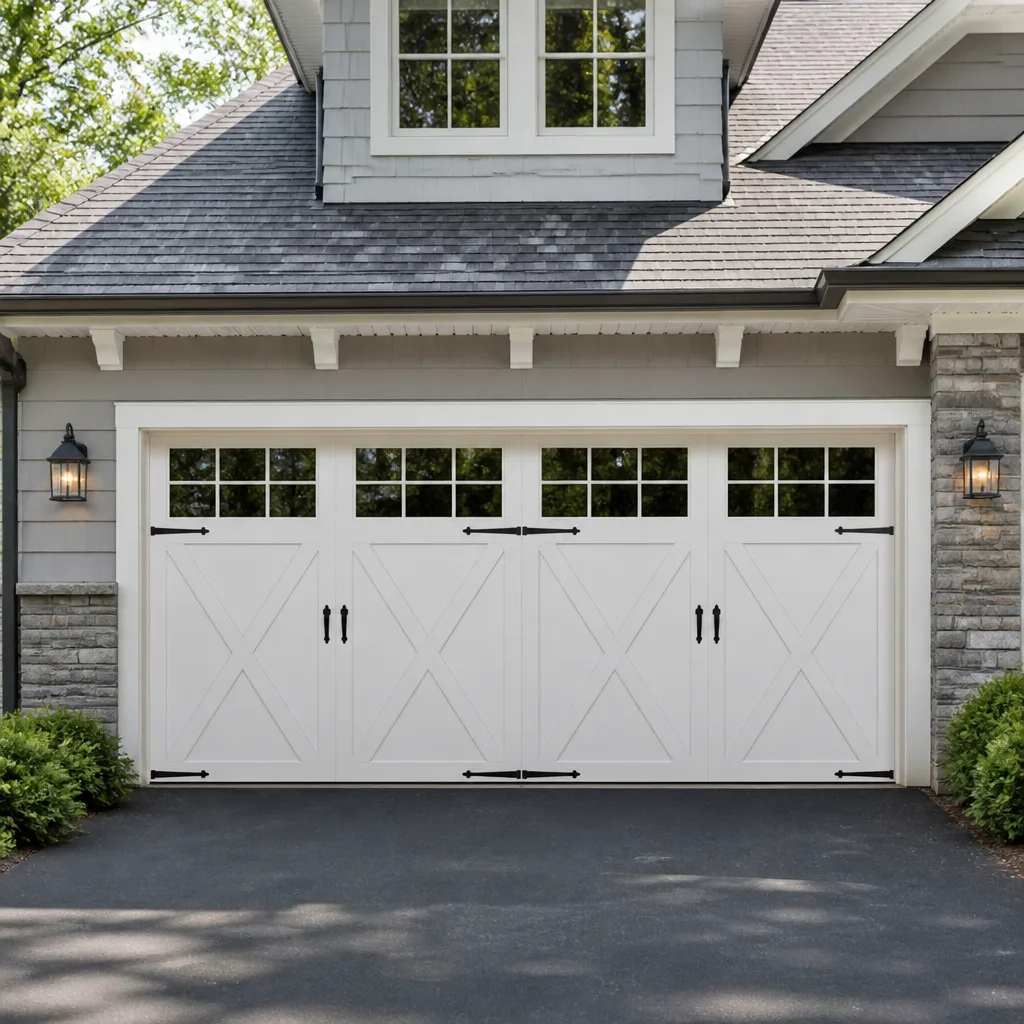 Carriage house
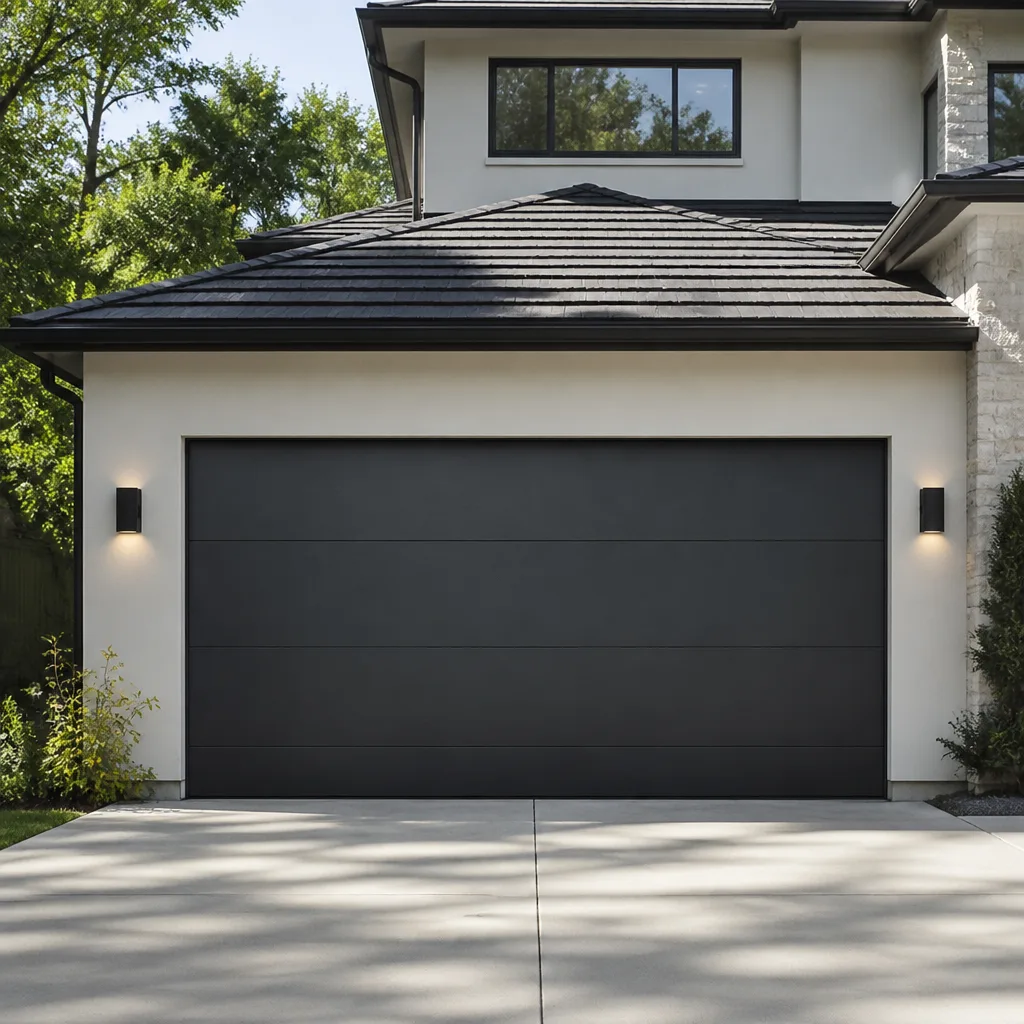 Modern flush
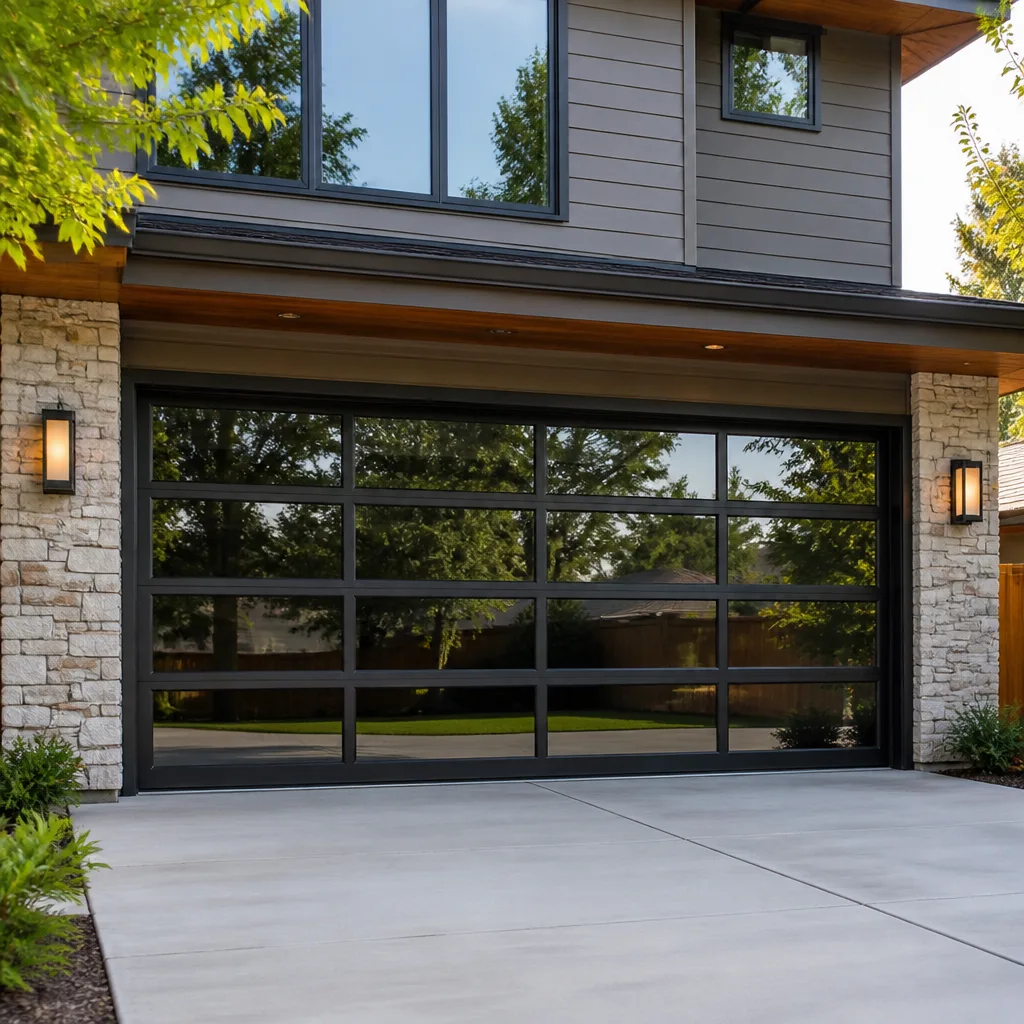 Full-view glass
 LiftMaster openers
 Chamberlain openers
Full 25-point door and opener safety check with every visit - springs, cables, rollers, tracks, and your LiftMaster or Chamberlain opener included
You get a price before we start. It does not change when the pro arrives.
Get your free estimateDIY vs Professional Garage Door: The Newark Homeowner’s Decision Guide
Most homeowners sort garage door work into two buckets: easy and hard. That’s the wrong line. The real line runs between tasks that are physically safe for a careful homeowner and tasks where the hardware itself stores enough energy to injure you before you can react. A torsion spring under tension carries force that a winding bar cannot absorb when something slips. In Newark, where most garages are attached and the door is the largest moving object on the property, that distinction matters. This guide draws the line precisely: what you can handle, what a trained technician should do, and how to be a useful partner to the person who shows up.
Styles & brands we work with
- Raised-panel steel
- Carriage house
- Modern flush
- Full-view glass
- LiftMaster openers
- Chamberlain openers
Quick Answer
Newark homeowners can safely handle cosmetic and low-tension jobs: bottom seals, weather stripping, opener remote programming, and visual inspections. Anything involving torsion springs, cables, high-tension hardware, or full door replacement needs a trained professional. The savings on a DIY spring replacement are not worth the injury risk, and a Newark installation on an attached garage often triggers an inspection that changes the calculus entirely.
Table of Contents
- Where the DIY Line Actually Falls
- What Newark Homeowners Can Safely Do Themselves
- Torsion Springs: The Task That Injures DIYers
- The Newark Permit Angle
- The Real Cost Comparison
- How to Be a Productive Partner to Your Technician
- Why Brand Knowledge Changes the Repair-or-Replace Call
- Common Mistakes to Avoid
- When to Call a Professional
- Frequently Asked Questions
- The Bottom Line
Where the DIY Line Actually Falls
The garage door industry has a well-known internal joke: nobody gets hurt replacing a photo-eye sensor. The injuries come from the parts under tension. That’s not a scare tactic, it’s a mechanical fact. A torsion spring that’s been wound to balance several hundred pounds of door weight is storing that energy in a coiled steel rod. Release it wrong and the stored energy leaves in milliseconds.
In our experience, most homeowner injuries in Newark and the surrounding neighborhoods fall into a narrow list. Torsion spring adjustments. Cable replacement under tension. Attempting to remove or rehang a panel on a door whose springs are still under load. Trying to swap a spring with consumer tools that weren’t designed for the geometry involved.
Everything else is fair game for a careful homeowner. Seals, rollers, hinges on extension-spring doors, remote pairing, and basic opener resets are all reachable tasks that don’t require a technician on site. The trick is knowing which is which before you start.
Here is the working rule we give homeowners who ask: if the task involves releasing or re-tensioning stored energy, stop. If it involves removing or replacing parts that don’t hold back the door’s weight, proceed with care. That single line resolves most of the debate.
What Newark Homeowners Can Safely Do Themselves
Several maintenance and repair tasks are well within reach for a homeowner with basic tools and a photo of the original setup. They save real money and don’t put you in the path of stored energy. Here’s the short list we hand out:
- Bottom seal (astragal) replacement. The rubber seal along the bottom of the door wears out, especially through cold Newark winters where freeze and thaw cycles harden the rubber faster. Replacement is a slide-and-press job.
- Weather stripping along the sides and top. Stops drafts, keeps leaves and debris out, and prevents the pest problems that come with a gap.
- Remote and keypad programming. Replacing a lost remote on a Chamberlain, Genie, or LiftMaster opener is a menu walk on the unit or a scan of the manual. No tools required.
- Opener reset and force adjustment. Modern openers have a force dial or a menu setting for how hard they push. If the door reverses mid-travel on a clear day, this is worth checking first.
- Roller replacement on extension-spring doors. Nylon rollers fail on a schedule and replacing them on an extension-spring setup is safe if the springs are fully relaxed. On torsion doors, this task belongs to a technician.
- Cleaning and lubrication. The tracks, hinges, and rollers benefit from a light application of garage-door lubricant once or twice a year. Skip the WD-40, use a product labeled for garage doors.
- Visual inspection. Once a month, look at the cables, springs, and hinges with the door closed. Catch fraying early and you’ll avoid a much bigger bill later.
If you pick up a problem during your own inspection, note what you see and call us before attempting the fix yourself. Newark homeowners can reach Newark Garage Door Service and describe the issue; that phone conversation is what tells you whether the job is still a homeowner task or has crossed into technician territory.
Torsion Springs: The Task That Injures DIYers
Torsion spring replacement is the one job we tell Newark homeowners, without exception, not to attempt. Here’s why the standard “watch the video, you’ll be fine” advice falls apart on this task: the tools that make it safe are specific to the trade. A proper torsion winding bar has a specific length and a hardened tip that sits inside the winding cone. Consumer tools are not built to the same specification.
When a spring is wound to balance a door, the winding cone holds back the whole spring’s tension. If a bar slips out of the cone at that moment, the cone spins at speed. The bar becomes a projectile in a tight space. Drywall, door panels, and the person holding the bar are all in the way. This is the actual mechanism of the injuries, not the spring snapping in half as people picture.
There is no consumer tool that makes this safe. There is no clever YouTube trick. Even experienced DIYers who have done other spring work on other equipment get hurt on garage torsion springs because the geometry is specific and unforgiving. Extension springs are more approachable but they still need restraint cables and proper safety practices; we don’t recommend homeowners replace those either without training.
What we will do: diagnose the spring, measure its wire gauge, inside diameter, and length, and replace it with the correct spec. On a Newark door, the wrong spring is a door that gets heavy, jumps the track, or fails again in a few months. Spring work is exactly what garage door repair exists for, and it’s the repair where a specialist genuinely matters.
The Newark Permit Angle
Full garage door replacement is where the DIY calculation inverts. Most cities, including Newark, treat a new door installation on an attached garage as a structural and safety change for the home. That means a building permit, and it means inspection. The inspection is what changes the do-it-yourselfer’s math.
When your installer is a licensed professional, the permit and inspection are routine. When the installation is performed by the homeowner, the inspection raises questions about who is certifying the work. Some jurisdictions require a licensed contractor to sign off on certain aspects of the install. Newark’s building department is the authority on exactly what your job requires; we always tell homeowners to call them before starting a new door project and ask two questions: does this work need a permit, and who is allowed to sign off on the inspection? The answer to that second question is often what decides the DIY-versus-pro call.
There’s also the practical piece. A new door install is a measurement job before it’s an installation job. The order of operations is: measure the rough opening, measure the headroom and side clearance, order the door to spec, schedule the install, and pass inspection. If any of those steps is off by an inch, the door doesn’t fit and the lead time starts over. A Newark homeowner who has never measured headroom before can burn a week and a return freight charge discovering this.
The Real Cost Comparison
The cost question looks lopsided until you count the second attempt. A DIY job done right saves money. A DIY job done slightly wrong can cost more than the professional version did in the first place. Here’s the honest math on the tasks Newark homeowners most often try to handle themselves:
- Bottom seal replacement. Material cost is modest. Done correctly, that’s the whole bill. Done incorrectly, the new seal pulls out of the retainer or the door binds, and you’re back to square one with damaged hardware.
- Weather stripping failure. Cheap material, cheap task. If it’s installed at the wrong depth, the door won’t close flush, and the opener’s force settings have to be redialed or the door will stop mid-cycle.
- Opener remote programming. Effectively free with the manual. If the remote still won’t pair, the problem is usually the opener’s logic board or the remote itself, which is a diagnosis call, not a programming call.
- Torsion spring replacement. The math here is not the helpful kind. A pair of springs costs about twice the single-spring range you’ll see quoted at most outlets, because they’re almost always replaced as a matched pair. That is the material cost. The injury risk on this task is the reason we don’t recommend it as a cost-saving measure.
- New door installation. On a Newark attached garage, add the permit and the inspection to the DIY side of the ledger. The cost comparison rarely favors the homeowner once those are counted.
The real question isn’t “which is cheaper.” It’s “which is cheaper once.” We tell homeowners to run that math on their own job before deciding. A free estimate is the fastest way to know what the professional version actually costs; you can call (866) 942-6834 to schedule one. Prices are set per job by the written estimate, and the price is quoted and agreed before any work starts.
How to Be a Productive Partner to Your Technician
The most useful thing a Newark homeowner can do to reduce the billable time on a repair is the prep work that doesn’t touch the components. Technicians spend real time on things nobody thinks to count. Here’s what we ask homeowners to do before we arrive:
- Clear the garage floor. A technician who has to move a lawnmower, a bike, and three boxes to reach the door is billing for the move, not the diagnosis.
- Clear the parking area in front of the garage. Space to open the door through its full travel makes the diagnostic steps faster.
- Photograph the opener nameplate. The sticker with the model and serial number is what tells us which parts we’re dealing with. Chamberlain, Genie, LiftMaster, and the rest each have their own logic, remotes, and drive systems. A photo of that plate saves a trip.
- Photograph the door label. Clopay and Amarr, among others, use model stickers that tell us the door’s exact spec. Photo of the sticker, photo of the springs if they’re visible, and photo of the opener arm are three photos that resolve most diagnostics before we hit your driveway.
- Note the symptoms. Does the door reverse? Stop halfway? Grind? Does the opener click and do nothing? Does the remote work sometimes? Write it down. Symptom notes are the difference between a 20-minute diagnostic and a 60-minute one.
- Know the age and history. If the door has been there since you moved in, and the spring has never been replaced, that’s useful. If a neighbor’s came down last winter, yours may be its twin.
- Note the door weight feel. Disconnect the opener and try to lift the door by hand halfway. If it’s heavy or it slams when releasing, that’s a spring symptom. Just don’t go past halfway or attempt to hold it there for long, and don’t do this at all if you suspect a spring failure.
The prep work is not busywork. It’s real time saved on a real visit. If your door is currently struggling, describe what’s happening to our team on the phone and we can usually tell you which of the three service lines fits before you book the visit.
Why Brand Knowledge Changes the Repair-or-Replace Call
Garage doors and openers are not interchangeable. The spring spec is door-specific. The track mounting is door-specific. The opener’s logic board, remote programming sequence, and force adjustment are opener-specific. A technician who mostly works on one brand will spend the first visit learning yours. That visit is the homeowner’s money.
We work on eight of the residential brands Newark homeowners most commonly have installed: LiftMaster, Chamberlain, Genie, Clopay, Amarr, Wayne Dalton, Craftsman, and Raynor. Our technicians have up to 9 years of experience across these systems. That matters on the diagnosis call more than it does on the install, because the diagnosis determines whether you repair or replace. A Genie opener that’s not responding to the remote may have a remote pairing issue, a logic board issue, or a wall console issue, and each has a different cost. A Clopay door panel that’s been dented may be replaceable as a single section, and that changes the whole math against a new door. Without the brand-fluent diagnosis, the “replace it” call is often the only safe answer the tech can give.
Opener repair deserves its own mention because it’s a separate specialty from door repair. Motors, drive systems, remotes, and smart-connection components all live inside that housing. The right fix is often a specific component, not a whole-opener swap. We treat garage door opener repair as a standalone line of work for exactly that reason. If the motor’s fine and the logic board is failing, replacing the motor is a waste. If the logic board is fine and the drive is stripped, replacing the logic board doesn’t help.
Common Mistakes to Avoid
- Attempting a torsion spring replacement with consumer tools. The winding bar is the specific tool for a specific reason. Consumer tools don’t have the same hardened tip or the same fit in the winding cone. The savings never outweigh the risk.
- Disconnecting the opener and leaving the door up on a failing spring. A door that won’t hold its own weight on a failing spring can drop. Don’t leave the door in the open position if the springs have failed or are clearly compromised.
- Overtightening weather stripping around a Newark door in winter. Cold makes the rubber stiff. Tightening the strip to seal a draft usually binds the door against the frame, and the opener reads it as a resistance fault. Loosen and re-seat rather than crank.
- Replacing one spring of a matched pair. Springs are matched to load. If you replace one and not the other, the door is unbalanced, the opener works harder, and the older spring fails shortly after. Replace both or plan to be back on this task within a season.
- Assuming a “sensor problem” is a sensor problem. Most opener faults that look like sensor issues are actually force-setting issues, remote pairing issues, or a logic board that needs replacement. Rule out the simple ones first by consulting the manual; call for diagnosis when the simple ones don’t resolve it.
- Installing a new door on an attached garage without checking the permit requirement. Newark’s building department is the authority on what your installation requires. Ask before you order the door, because retrofitting the permit after the fact is more work than getting it right at the start.
- Replacing the opener when the door is the actual problem. A door that’s heavy, off-track, or has a failing spring makes any opener struggle. Fix the door first, then decide whether the opener needs anything. A brand-fluent diagnosis is the difference between the two calls.
When to Call a Professional
Call for any spring, cable, or high-tension work. Call if the door has come off the track, if a panel is bent or cracked, if the door is sagging on one side, or if the opener is making noises it didn’t make before. Call if the door reverses without an obstruction, if the light on the opener blinks in a pattern you don’t recognize, or if the remote has stopped working and reprogramming doesn’t fix it. Call before you install a new door on an attached garage in Newark, because the permit and inspection question shapes the whole project.
Newark Garage Door Service offers free estimates in Newark. Call (866) 942-6834. We answer 24/7, fast dispatch from 7am to 7pm, Sunday through Friday. The price is quoted and agreed before any work starts, so there’s no surprise on the invoice.
Frequently Asked Questions
No, we don’t recommend it. Torsion spring work requires a specific winding bar and hours of handling experience, and the injury risk from a slipping winding cone is real. The consumer tools available for this task aren’t built to the same specification as what a trained technician uses.
Bottom seals, weather stripping, remote and keypad programming, opener resets, cleaning and lubrication, and roller replacement on extension-spring doors are all reasonable DIY tasks for a careful homeowner. Anything that involves a torsion spring, a cable, or releasing stored energy belongs to a technician.
Ask Newark’s building department before you order the door. Most cities treat a new door on an attached garage as a structural and safety change, which means a permit and an inspection. The permit question shapes the project timeline and sometimes decides whether the install can be done by the homeowner at all.
Yes. Our technicians are experienced professionals who are trained on the eight residential brands we service, with up to 9 years of experience. The work is quoted up front and agreed before we start.
A garage door technician does garage door work as their full specialty, which is what makes a fast, correct diagnosis likely. General handyman services add door work to a long list of other jobs. On torsion spring work, opener electronics, and door-specific diagnosis, the specialist’s efficiency is the difference between a repair and a replacement recommendation.
Yes. We diagnose and repair motors, drive systems, remotes, and smart-connection components across Genie, Chamberlain, LiftMaster, and the other residential brands we service. Call (866) 942-6834 to book a diagnostic. We answer 24/7, fast dispatch from 7am to 7pm, Sunday through Friday. Estimates are free and the price is quoted before work starts.
The Bottom Line
The DIY-versus-pro question on a garage door isn’t about skill. It’s about which tasks carry catastrophic injury risk and which don’t. In Newark, the safe DIY list is real and worth taking seriously: seals, weather stripping, remotes, resets, lubrication, and visual inspection. The injury-risk list is short but firm: torsion springs, cables, high-tension hardware, and door replacement on an attached garage where the permit and inspection change the math. Match the task to the line, and the decision gets simple. If you’re not sure which side of the line your job is on, call (866) 942-6834. We answer 24/7, dispatch from 7am to 7pm Sunday through Friday, and the estimate is free. You can also browse our Newark service page for everything we cover.
Written by the team at Newark Garage Door Service.
See the difference
 Before
 After
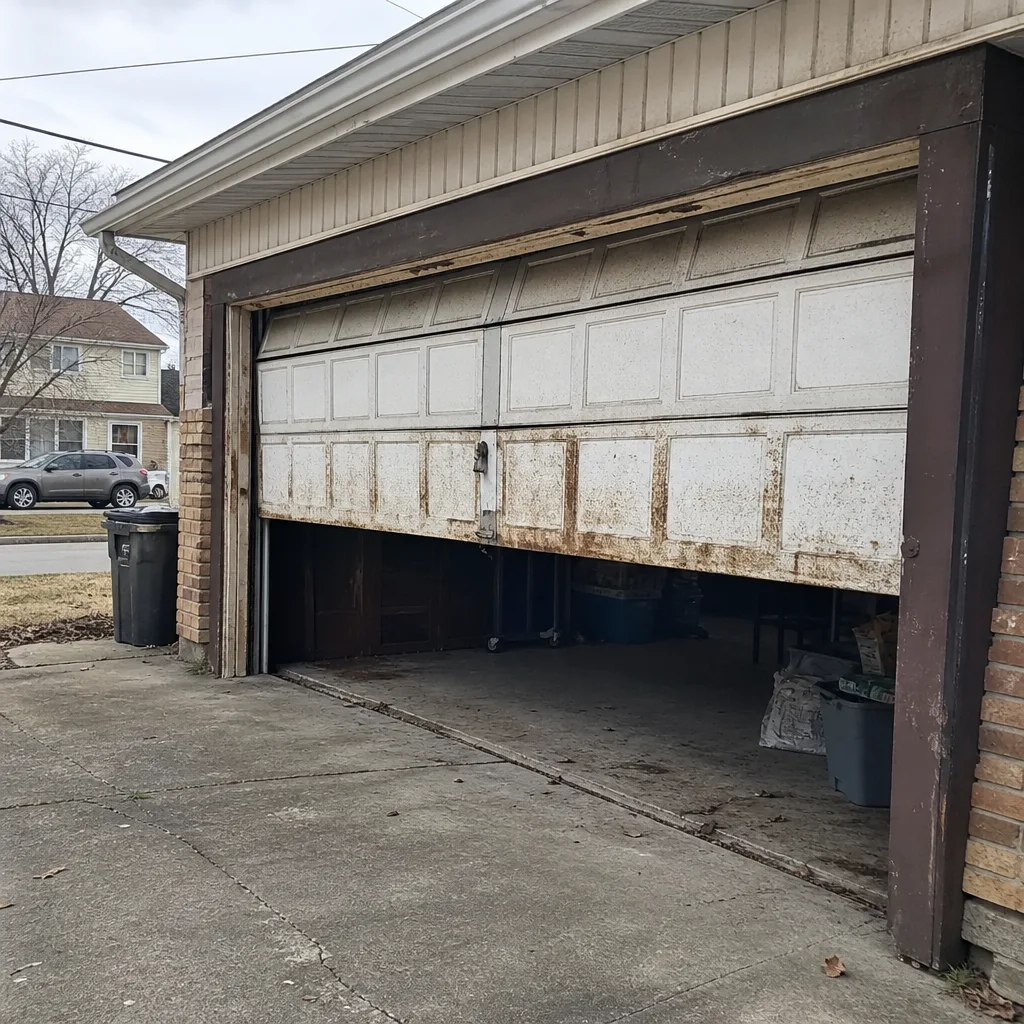 Before
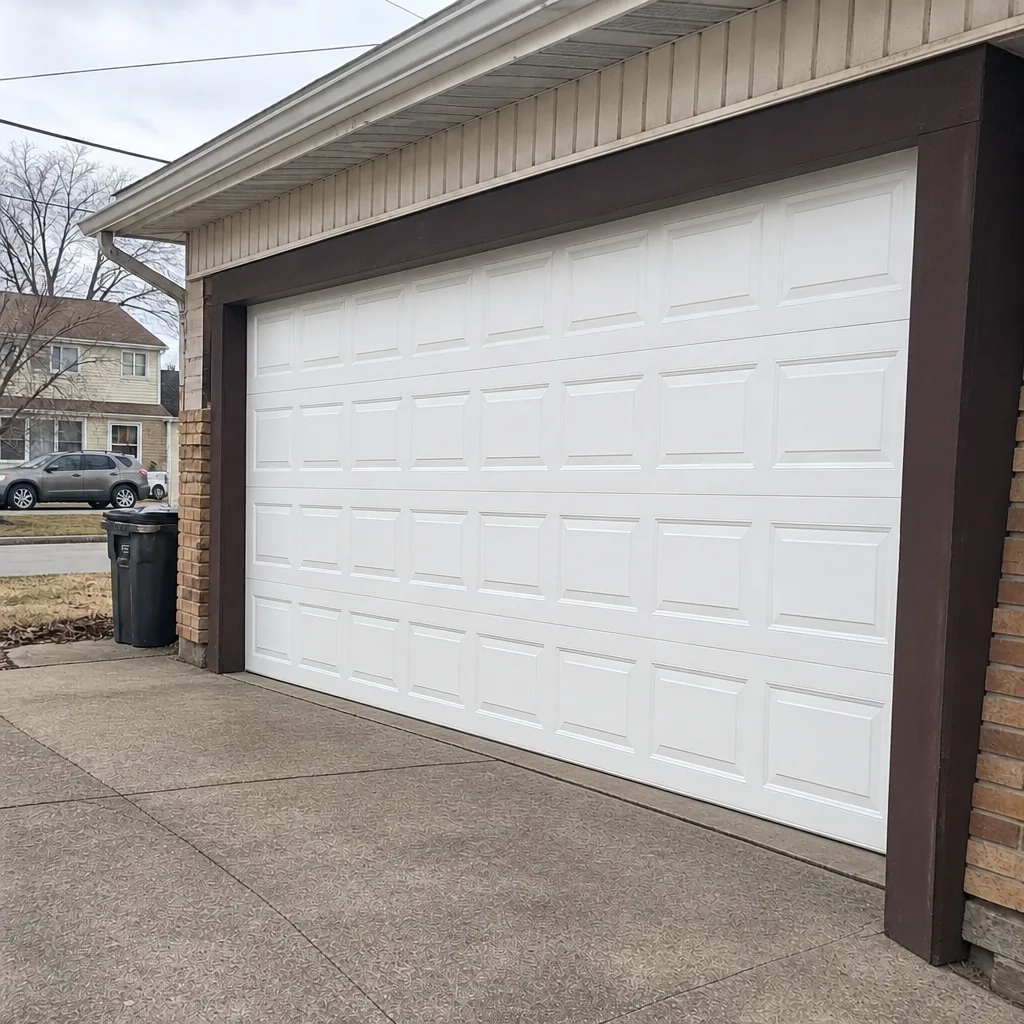 After
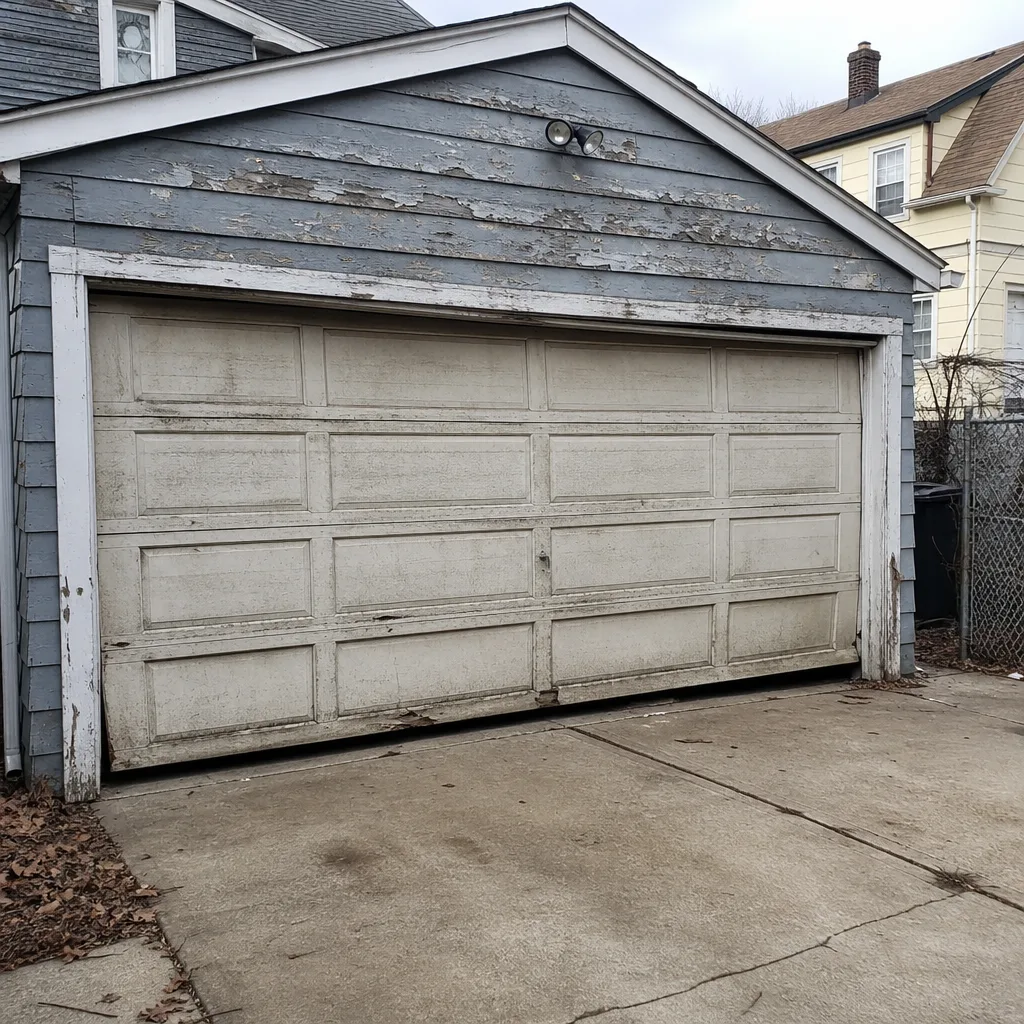 Before
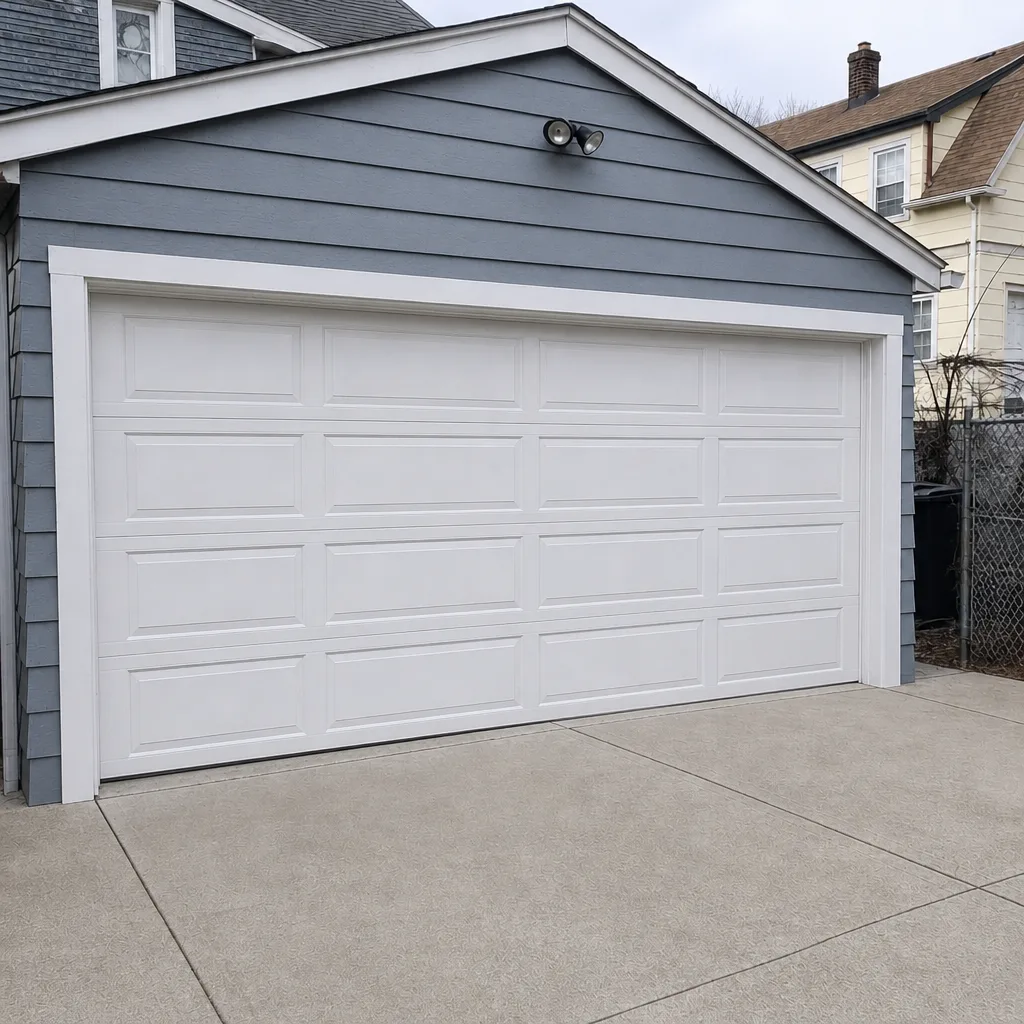 After