
Last updated November 14, 2026
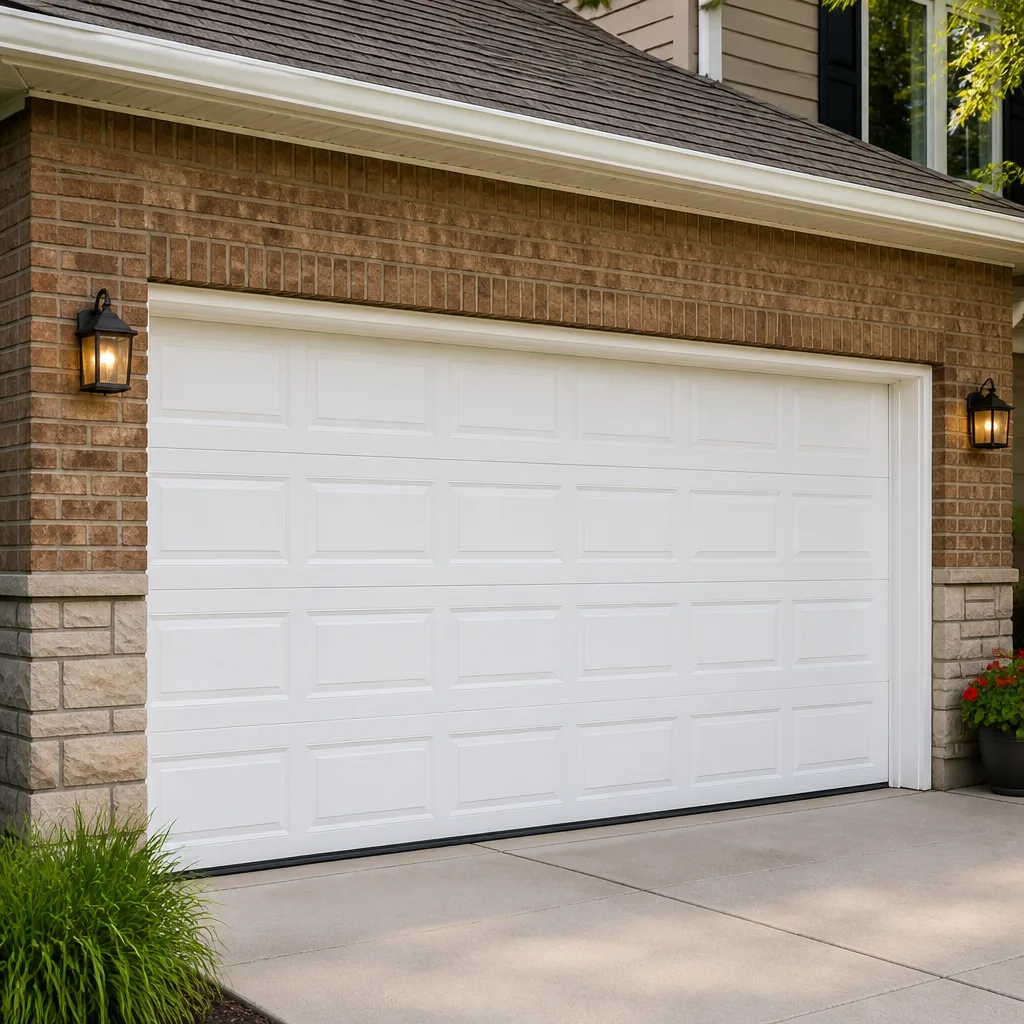 Raised-panel steel
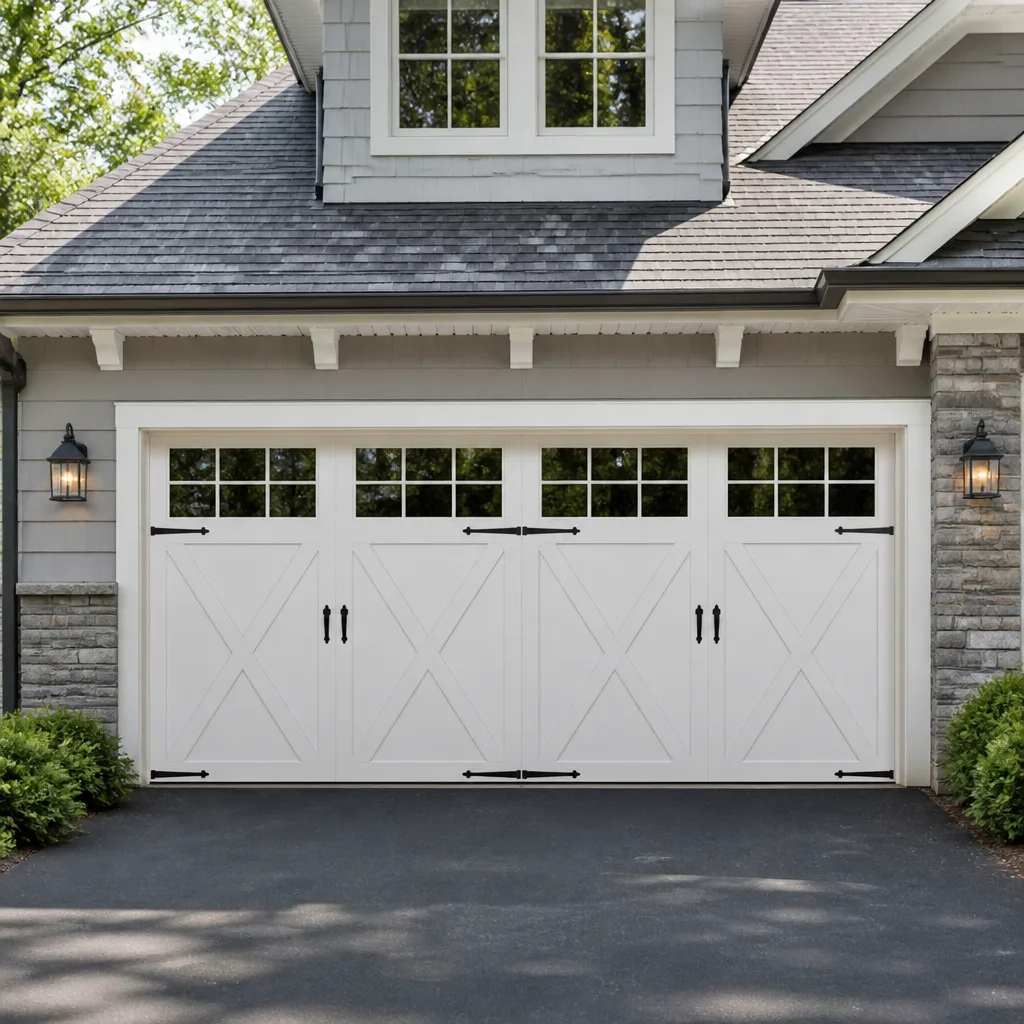 Carriage house
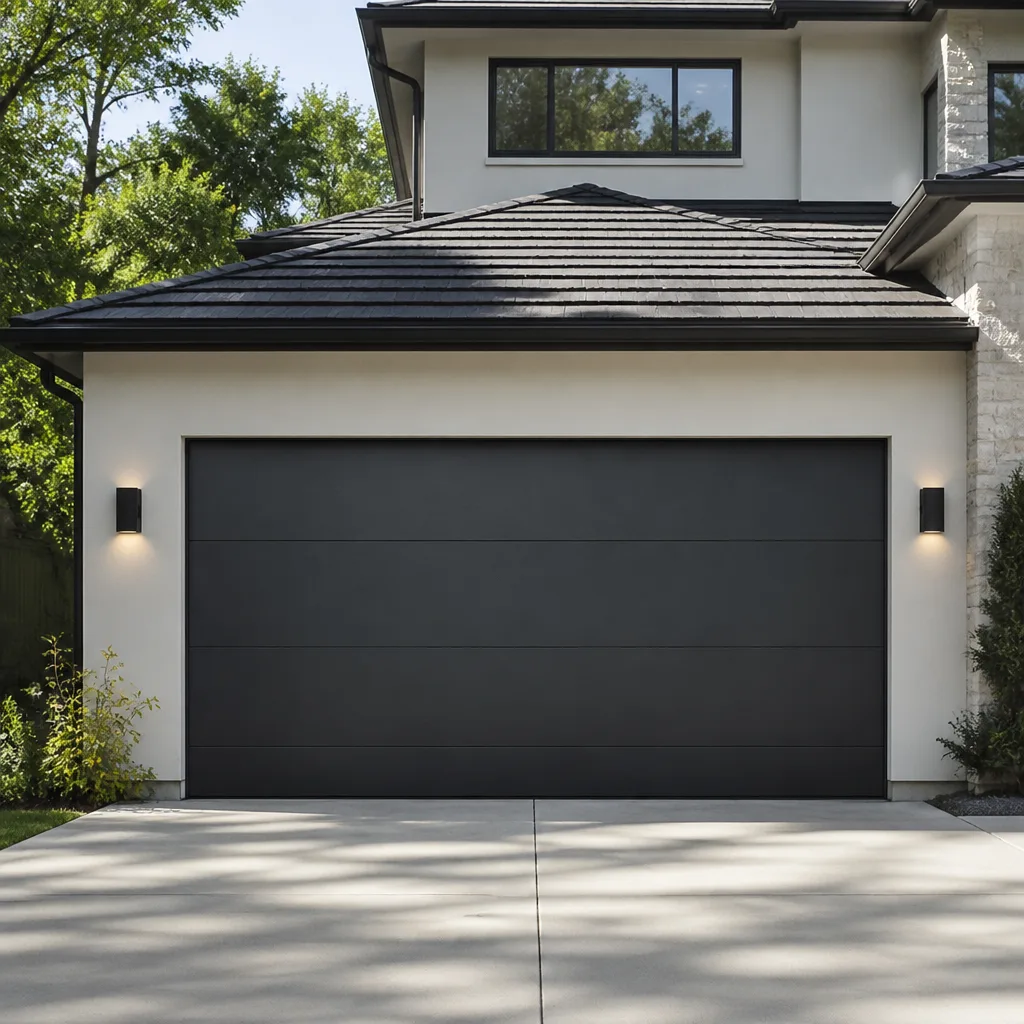 Modern flush
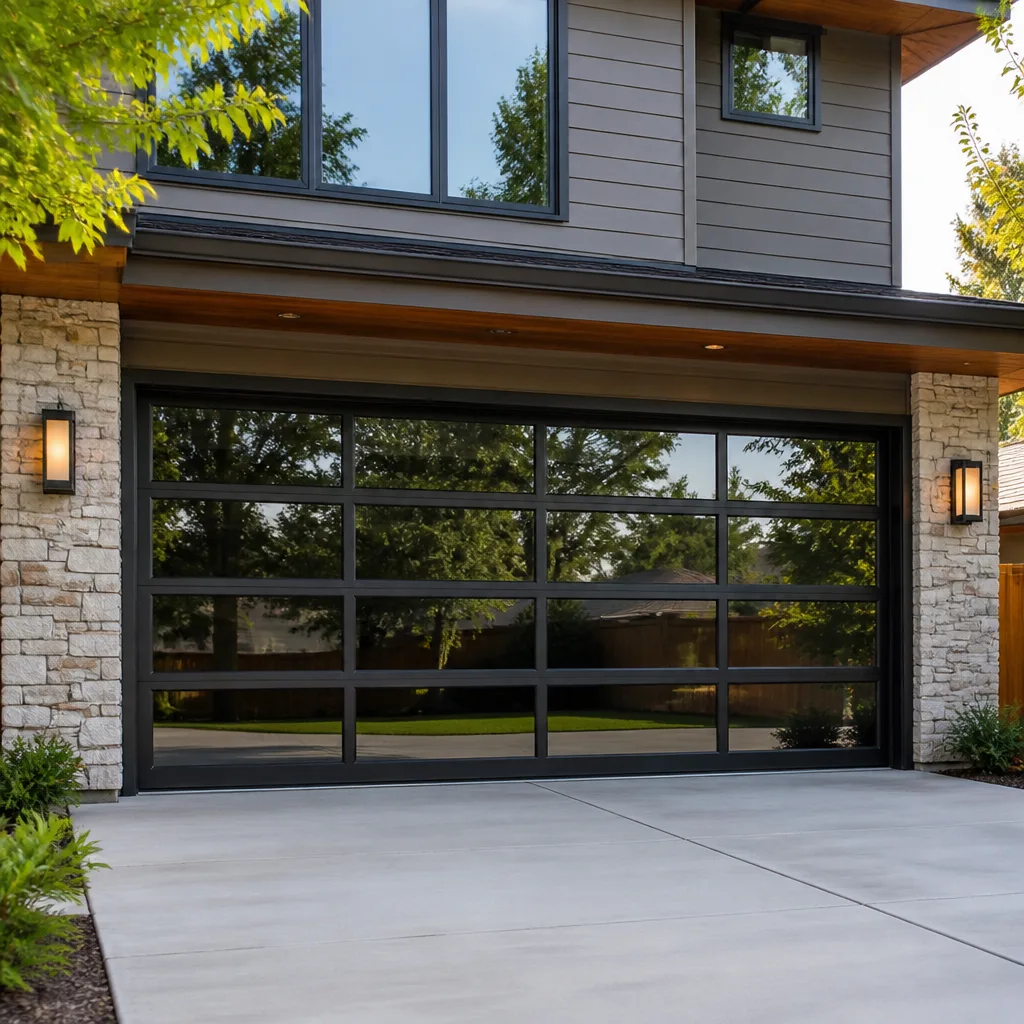 Full-view glass
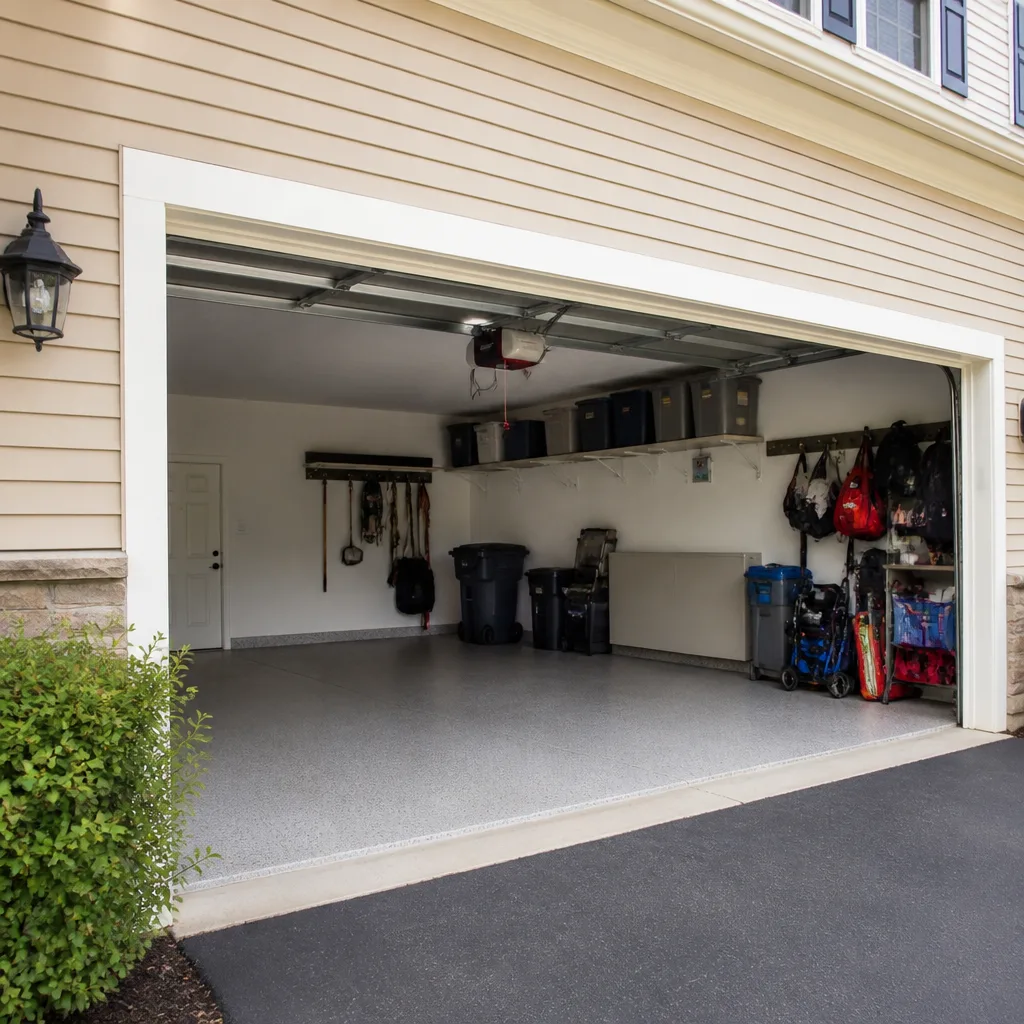 LiftMaster openers
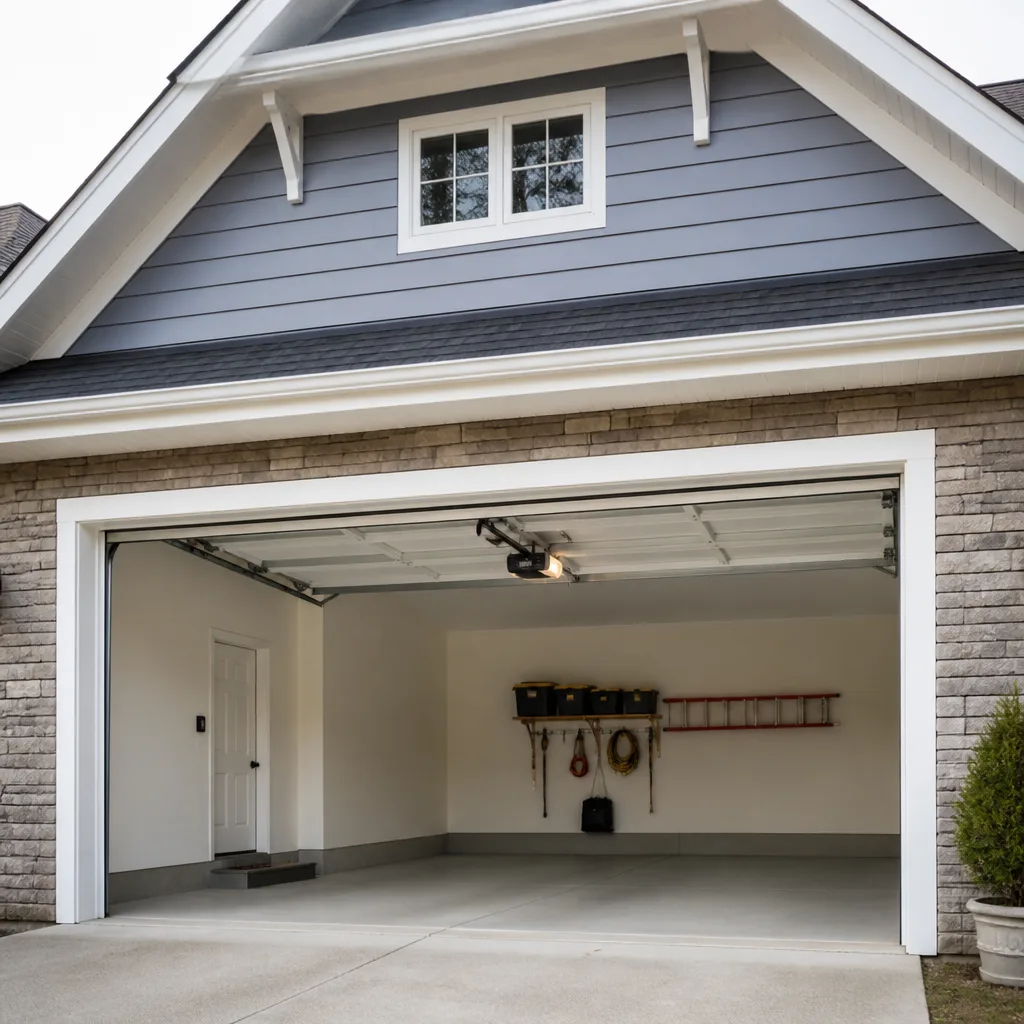 Chamberlain openers
Full 25-point door and opener safety check with every visit - springs, cables, rollers, tracks, and your LiftMaster or Chamberlain opener included
You get a price before we start. It does not change when the pro arrives.
Get your free estimateGarage Door Emergency Preparedness Guide for Newark Homes
Most garage door advice is written for the moment after something breaks. This one is written for the day before. The problem we run into in Newark homes isn’t usually that a door fails – doors fail, springs snap, openers quit. It’s that the homeowner has no idea how their own door works when it’s stuck closed with the car inside. When a nor’easter knocks the power out across the Ironbound or a torsion spring lets go on a cold morning in Forest Hill, the difference between a 15-minute fix and a two-hour scramble is whether you know where your emergency release cord is and what color it is. This guide walks you through manual disconnects on the four brands we see most in Newark, the correct way to lift a door by hand, power-outage and battery-backup reality, and the one-page emergency card every household should post before they need it.
Quick Answer
Every Newark homeowner should know three things before an emergency: where the manual release cord is on their specific opener, how to safely lift a door with a broken spring using two people, and their opener’s model number. Modern openers from LiftMaster and Chamberlain often have battery backup already, and Genie and Craftsman units can usually be retrofitted. When a door won’t move or won’t stay up, call a trained technician – a torsion spring under tension is dangerous and shouldn’t be handled yourself.
Styles & brands we work with
- Raised-panel steel
- Carriage house
- Modern flush
- Full-view glass
- LiftMaster openers
- Chamberlain openers
Table of Contents
- How do you operate the manual release on the four most common Newark openers?
- What’s the correct way to lift a door by hand when a spring is broken?
- What happens during a power outage, and how does battery backup work?
- Why won’t the door stay up when you lift it manually?
- How do Newark winters and nor’easters stress your door?
- How do you build a 60-second garage door emergency card?
- Which brands do Newark homeowners actually have?
- When should you stop troubleshooting and call a professional?
How Do You Operate the Manual Release on the Four Most Common Newark Openers?
The manual release is a cord hanging from the trolley that rides the rail above your door. Pull it, and the door disconnects from the opener so you can lift it by hand. That’s the theory. In practice, the cord looks different on every brand, which is why homeowners stand in front of a stuck door for ten minutes hunting for something they’ve never touched.
Here’s the breakdown for the four brands we find in the majority of Newark garages – the Ironbound, Weequahic, Vailsburg, Forest Hill, and the North Ward especially:
- LiftMaster: The release cord is typically red, hanging from the trolley near the rail. On newer models with a belt or chain drive, the trolley has a small lever, not just a cord – pull down firmly and slightly toward the door to disengage it.
- Chamberlain: Also red, usually with a plastic handle on the end. Chamberlain and LiftMaster share much of the same design lineage, so the pull motion is nearly identical: straight down, then a slight tug toward the door.
- Genie: The release cord is often red or a reddish-brown, and on some screw-drive units the release sits closer to the opener head than the door. Feel along the rail if you don’t see it hanging.
- Craftsman: Older Craftsman units (many still running in Newark homes) use a red cord with a metal or plastic tab. On some models the release is a lever on the trolley rather than a free-hanging cord.
One universal truth: once you pull the cord, the door is disconnected from the opener. To reconnect, you’ll need to slide the trolley back and pull the release lever the other way, usually with the door in the fully closed position. If the trolley won’t re-engage, that’s a sign the door is out of balance and worth a look – a garage door opener repair technician can check the trolley and limit settings in one visit.
Our advice is simple. Go out to your garage this week, find the cord, and pull it once with the door closed and the opener off. Re-engage it. Do this now, in daylight, when nothing is stuck. Then it won’t be a mystery later.
What’s the Correct Way to Lift a Door by Hand When a Spring Is Broken?
If you pull the release cord and the door still won’t lift, or lifts with a dead, grinding weight, you probably have a broken spring. A garage door without a working spring is a very heavy object – easily over a hundred pounds – and lifting it wrong can hurt your back or drop the door on someone.
Here’s the only safe sequence: the two-person technique for getting a vehicle out. It is not a regular workaround. Do it once, get the car out, and stop.
- Make sure the opener is disengaged. The door must be disconnected from the trolley so you’re not fighting the motor.
- Both people stand on the same side of the door, facing it. One at each end of the bottom section, hands on the bottom panel’s inner frame – never on the hinges or the handle.
- Lift together, evenly. Push up slowly with your legs, keeping the door level. If one side lifts faster than the other, the door is twisting – stop.
- One person holds the door at waist height while the other drives the car out. Never leave the door unattended mid-height.
- Lower together, slowly. Let the door come down under control. Don’t let it slam.
- Do not lift the door again without a technician unless it’s another emergency.
The reason this is a one-time move is that a door missing a spring is unbalanced. The other spring (if there is one) is now doing all the work and can fail too. Hinges, cables, and the bottom bracket are all taking loads they weren’t designed for. What’s the interim fix? Leave the door closed and call. If you need to park a second car, move it first. Repairs in Newark typically involve replacing the spring (or matched pair) and rebalancing – something we can look at the same day when the call comes in early.
What Happens During a Power Outage, and How Does Battery Backup Work?
When the power goes out, your opener is dead but the door is not stuck. The manual release still works – pull the cord, lift the door by hand, and you’re back in business (assuming springs are intact). Where it gets interesting is the newer openers with battery backup, which let you keep using the remote even when the grid is out.
Battery backup has been built into many LiftMaster and Chamberlain openers from recent model years, and it’s often standard on Wi-Fi-enabled models. It runs on a small internal battery or a plug-in backup pack and usually gives you a handful of open/close cycles before it needs recharging – enough for a power outage that lasts an afternoon.
Older Chamerlain and LiftMaster models, and many Genie and Craftsman units, don’t have battery backup from the factory. For those, you have three choices:
- Retrofit battery backup where the manufacturer makes a compatible kit. Not every model supports it, so check your owner’s manual or have a technician confirm.
- Use the manual release as your outage plan. It’s slower but free.
- Replace the opener if you’ve been thinking about it anyway – a new Wi-Fi opener with battery backup is a single visit.
During the last nor’easter that went through northern New Jersey, we answered a lot of calls from homeowners who couldn’t open their door at all because they didn’t realize the release cord was still there. We answer 24/7. A call outside dispatch hours is booked into the next opening, Sunday through Friday, 7am to 7pm. But the better fix is knowing your cord before the storm hits.
Why Won’t the Door Stay Up When You Lift It Manually?
If you pull the release cord, lift the door, and it drops back down on its own, the counterbalance is failing. On a torsion spring door – which most Newark garages have – the springs are wound to hold most of the door’s weight. When one spring breaks or loses tension, the remaining spring can’t lift the door, and gravity wins.
Lifting a door with a broken spring is a losing battle. You’ll feel it: the weight at the bottom of the lift is heavy and gets heavier, not lighter. If it won’t stay up when you let go, don’t keep trying. The interim safety measure is straightforward:
- Leave the car where it is unless you can lift the door with another person and get it out in one shot (see the technique above).
- Disconnect the opener so it doesn’t try to run a jammed door and burn out the motor.
- Keep the door closed all the way if you can, so no one treats it like a normal door and gets hit. Don’t force it past its natural stop.
- Watch for a snapped cable. If you see a frayed or dangling cable on one side, stop entirely – cables are under extreme tension and can whip. That’s a technician call, not a homeowner call.
What tends to cause the “won’t stay up” failure in Newark specifically? Cold snaps in January and February. Torsion springs lose elasticity as the temperature drops and are far more likely to break on the first cold morning after a milder week. That’s why we get seasonal spikes in spring calls every winter.
How Do Newark Winters and Nor’easters Stress Your Door?
Newark’s climate is a specific kind of hard on garage doors. Winters are cold, wet, and windy, and a nor’easter can leave the power out, freeze the door to the ground, and drop temperatures below what your springs have seen in months. Here’s what actually happens to a Newark door in that weather:
- Cold springs break. Torsion springs lose strength as the temperature drops. A door that lifts easily in October gets heavier by February. A short cold snap after a mild stretch is the classic failure window.
- The bottom seal freezes to the slab. Older concrete garage floors hold moisture and, in a hard freeze, the rubber bottom seal freezes solid to the ground. When the opener lifts, it pulls the door against a stuck seal, straining the bottom section and hinges.
- Wind stresses the door and hardware. A nor’easter can push hard enough against a closed door to flex a weaker or older panel. If your door is a hollow-steel builder model from decades back, wind can also rattle tracks and loosen the hinges and rollers.
- Rodent and debris damage shows up more in winter – a mouse in the track or a loose roller will make the door jump and bind.
- Salt and sand from the street – tracked in on the car and floor – works into hinges and rollers, causing squeaking and wear over time.
One pre-winter routine that pays off in Newark: before the first hard freeze, check the bottom seal for cracks, wipe the tracks clear, and listen to your door lift a few times. If the lift sounds different from last year, or the door hesitates, have a technician look at it – a rebalance now costs less than an emergency spring replacement in an ice storm. Rain, snow, and wind are also the three things that make walking the perimeter to check the door and opener worth two minutes of your week.
How Do You Build a 60-Second Garage Door Emergency Card?
This is the single most useful thing you can do for your garage this season. When something breaks, the last thing you want to do is dig through old paperwork for the model number while the car is trapped. A simple index card or sheet of paper taped inside your garage door does the job. Fill it out before you need it.
- Opener brand and model number. Usually on a sticker on the back or underside of the opener head, near the light lens. Write it down exactly.
- Door brand and material. Look at the tracks and any sticker on the door’s hinge side. If it’s a Clopay or Amarr door, note that – both have parts still available and technicians can order correct replacements from your paperwork.
- Spring type. Torsion spring (the horizontal spring mounted above the door, on the shaft) is the most common for Newark homes. Extension springs (vertical, along the sides) show up on older installations. Note which.
- Release cord location and color. Take a photo with your phone and note the color – red for LiftMaster, Chamberlain, Genie, and most Craftsman.
- Battery backup. Yes, no, or “not sure” – if not sure, the technician will check on the next service.
- The service number to call. That’s us at (866) 942-6834. We answer 24/7. Fast dispatch from 7am to 7pm.
Take a photo of the card and save it on your phone too. If you ever sell the house, the buyer will thank you. If a technician is on the way, having the model number ready shaves minutes off the conversation and helps us have the correct part before we roll.
Which Brands Do Newark Homeowners Actually Have?
Newark is an old city with a wide range of garage installations – new construction in the Ironbound, mid-century builds in Weequahic and Vailsburg, and rehabs all over the North Ward. The opener and door brands you’ll find under those roofs fall into a handful of families, and knowing which one you have makes every conversation faster.
The openers we see most often in Newark homes are LiftMaster, Chamberlain, Genie, and Craftsman. The doors are frequently from Clopay, Amarr, Wayne Dalton, or Raynor. That’s eight brands and covers nearly every residential installation you’ll find here. It’s also why we train and equip our technicians across all of them, rather than sending you off to find someone who can work your brand.
What does brand knowledge actually change on the ground?
- The parts match. A Genie drive gear isn’t a Chamberlain drive gear. Knowing the brand means we bring the right one.
- The release cord and trolley design are predictable. We know what’s hanging above your car before we see it.
- The opener’s limits and force settings are familiar. Each brand has its own programming sequence for travel limits, and knowing it is half the repair.
- Retrofit battery backup options are clear. Some brands and models support it, some don’t, and getting that answer right saves a return visit.
In our experience, the “we don’t service that model” dead end is one of the most common frustrations for homeowners in Newark. Working across these eight brands is how we avoid it. Our technicians have up to 9 years of experience, and they spend that experience on garage doors specifically – not on a long handyman checklist that happens to include a door.
When Should You Stop Troubleshooting and Call a Professional?
Most garage door problems fall into one of two buckets: things you can safely check in the garage and things that need a trained technician. Reconnecting a trolley, clearing a track, or checking that the opener is plugged in and the wall button works – those are safe. Anything that involves a spring, cable, bottom bracket, or the opener’s electrical internals is not.
Call a professional when:
- A spring has snapped, or the door won’t stay up when you lift it by hand
- The door has come off its track, or one side is higher than the other
- You hear a sharp pop from the spring area (that’s a spring breaking)
- The opener runs but the door doesn’t move, or the motor hums and stops
- The door reverses on its own during close, or fails to reverse on an obstruction test
- A cable is frayed, loose, or has left the drum
- The door is too heavy to lift, or the opener seems to struggle with the load
We offer free estimates in Newark. Call (866) 942-6834. We answer 24/7. Fast dispatch from 7am to 7pm, Sunday through Friday. Whether it’s a spring replacement, an opener that needs diagnosing, or a full garage door repair call, the estimate is free and the price is agreed before any work starts.
Common Mistakes to Avoid
- Pulling the release cord and letting the door drop. If the springs are intact, the door will still have some weight but can slam if the other spring is weak. Have a hand on the door and lower it slowly – every time.
- Leaving a stuck door halfway open as a “convenience.” A door that’s stuck at waist height is a danger. It can drop the rest of the way at any moment, especially with a broken spring. Close it fully before walking away, or get it out of the way entirely.
- Assuming the opener’s remote is “broken” when it’s a dead battery or Wi-Fi pairing issue. Before you buy a new opener, try a fresh battery in the remote and check the wall button. That pair of checks solves half the remote calls we get in Newark.
- Trying to force a frozen bottom seal open with the opener. It strains the door and the opener, and can tear a hinge. Get the seal free by hand first, or warm the slab with water.
- Running the opener on a door with a broken spring. The motor will pull against a door it can’t balance, burning out the opener over time. Disconnect the door from the opener until the spring is fixed.
- Ignoring a squeak in the tracks. A squeaky hinge or roller is the early sign of wear. Fixing it costs a fraction of what a failure costs later.
- Not knowing your model number. Newark homes change hands and get rehabbed. A previous owner may have swapped the opener or door without leaving paperwork. Snap a photo of the label on the opener head now – it will save time later.
See the difference
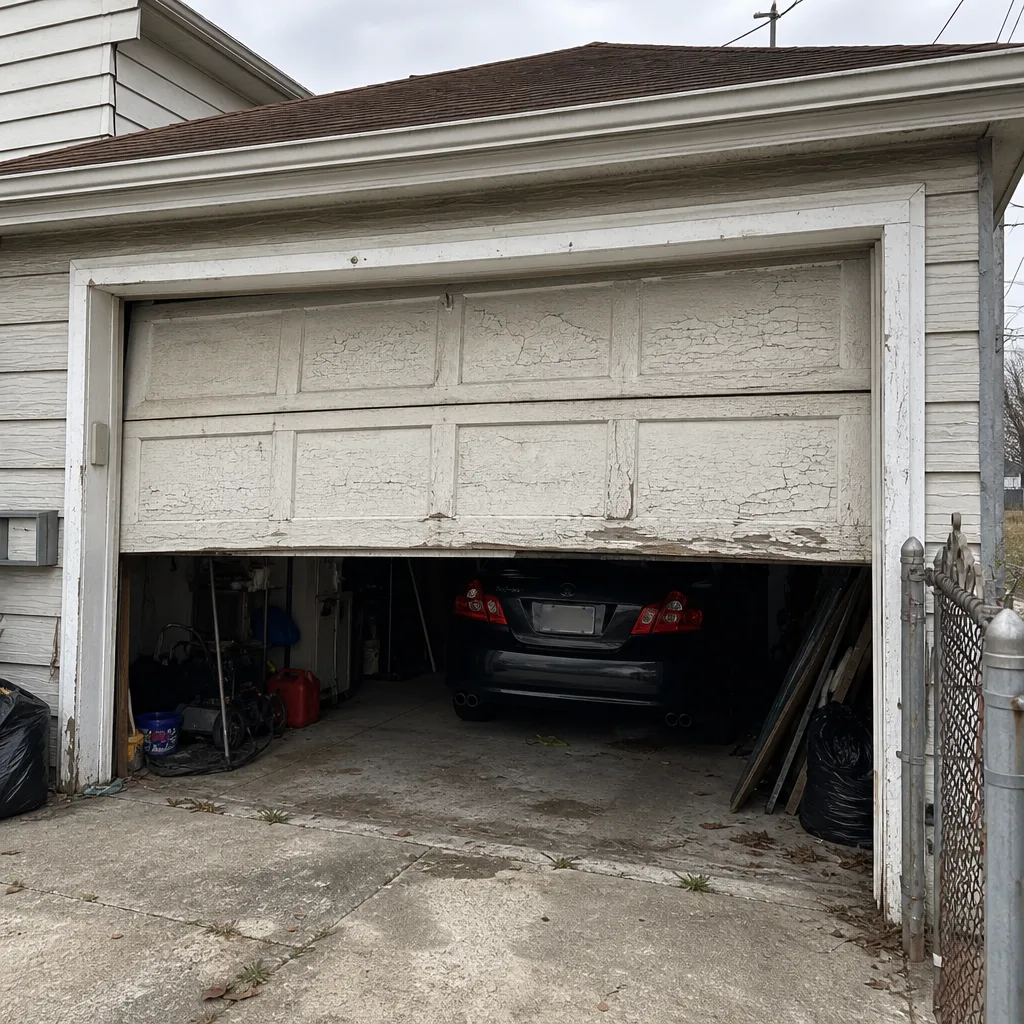 Before
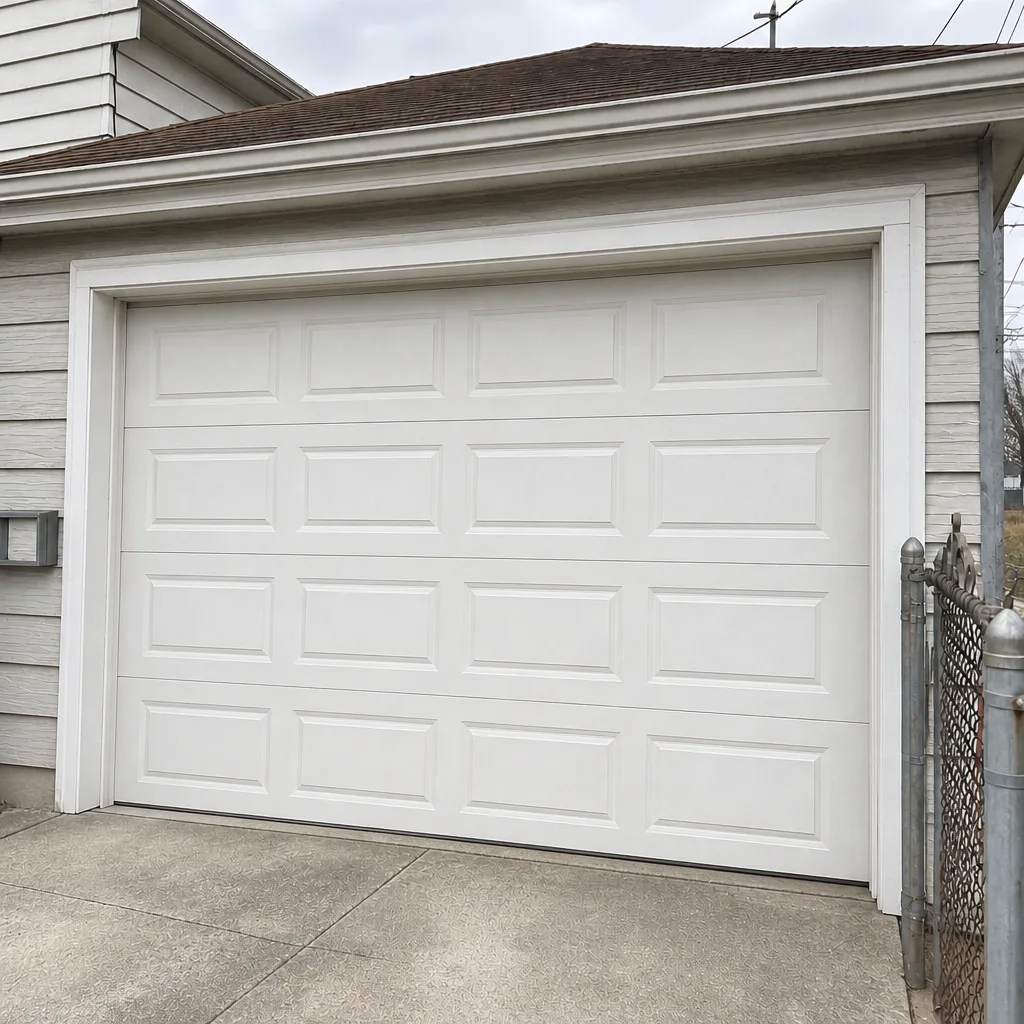 After
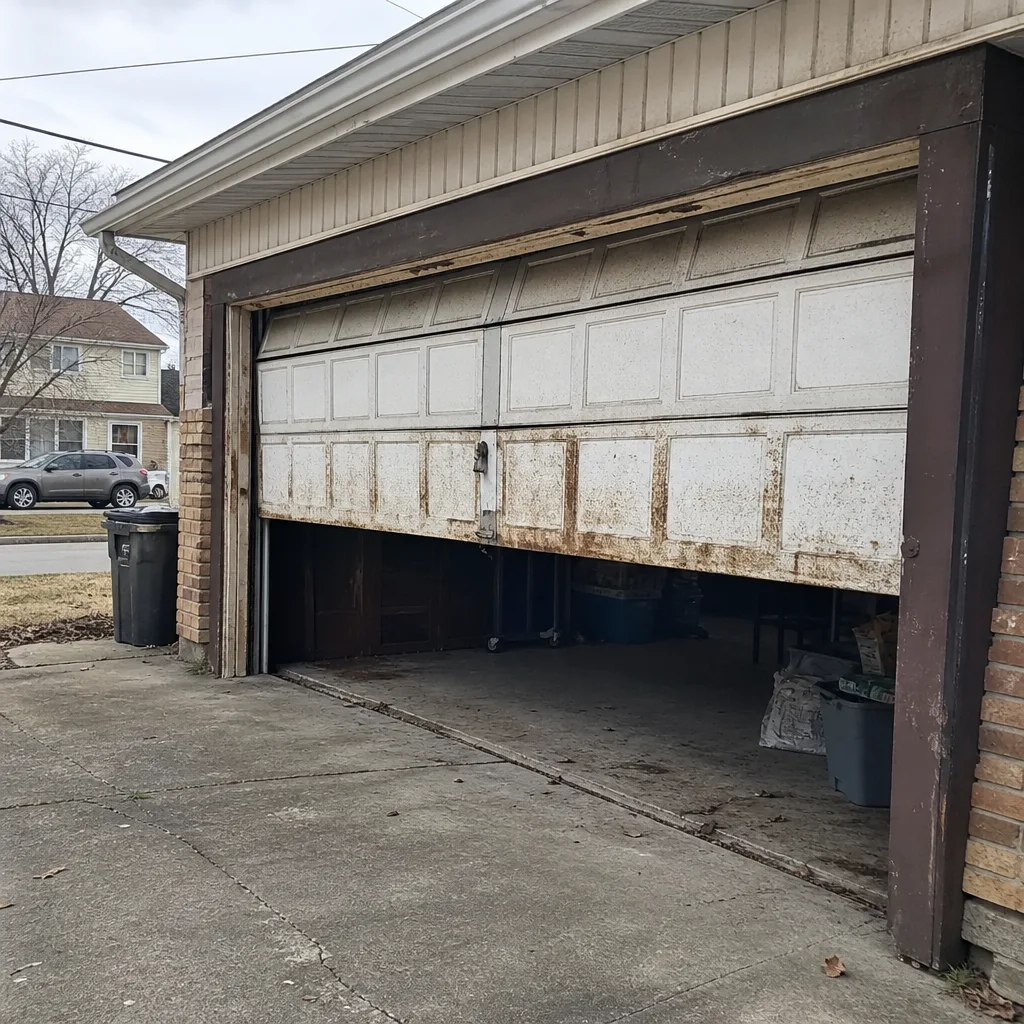 Before
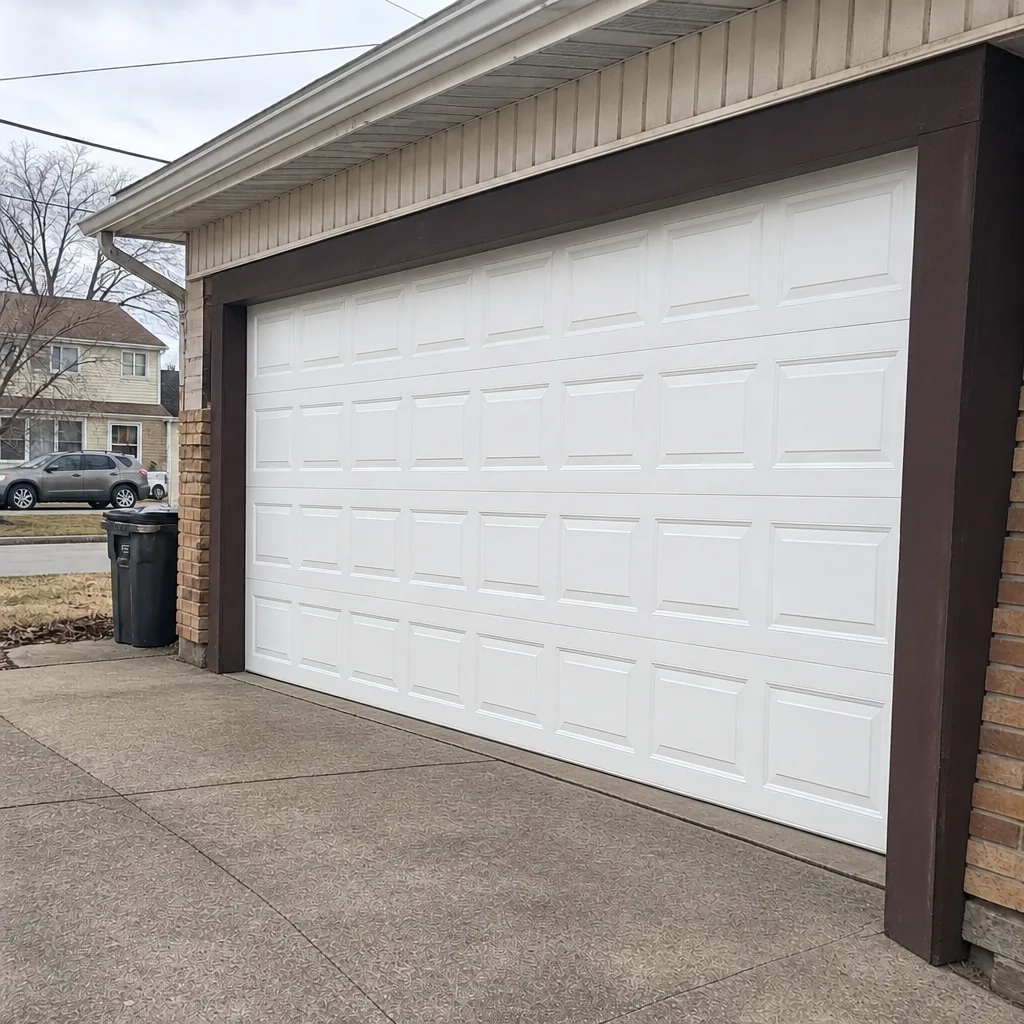 After
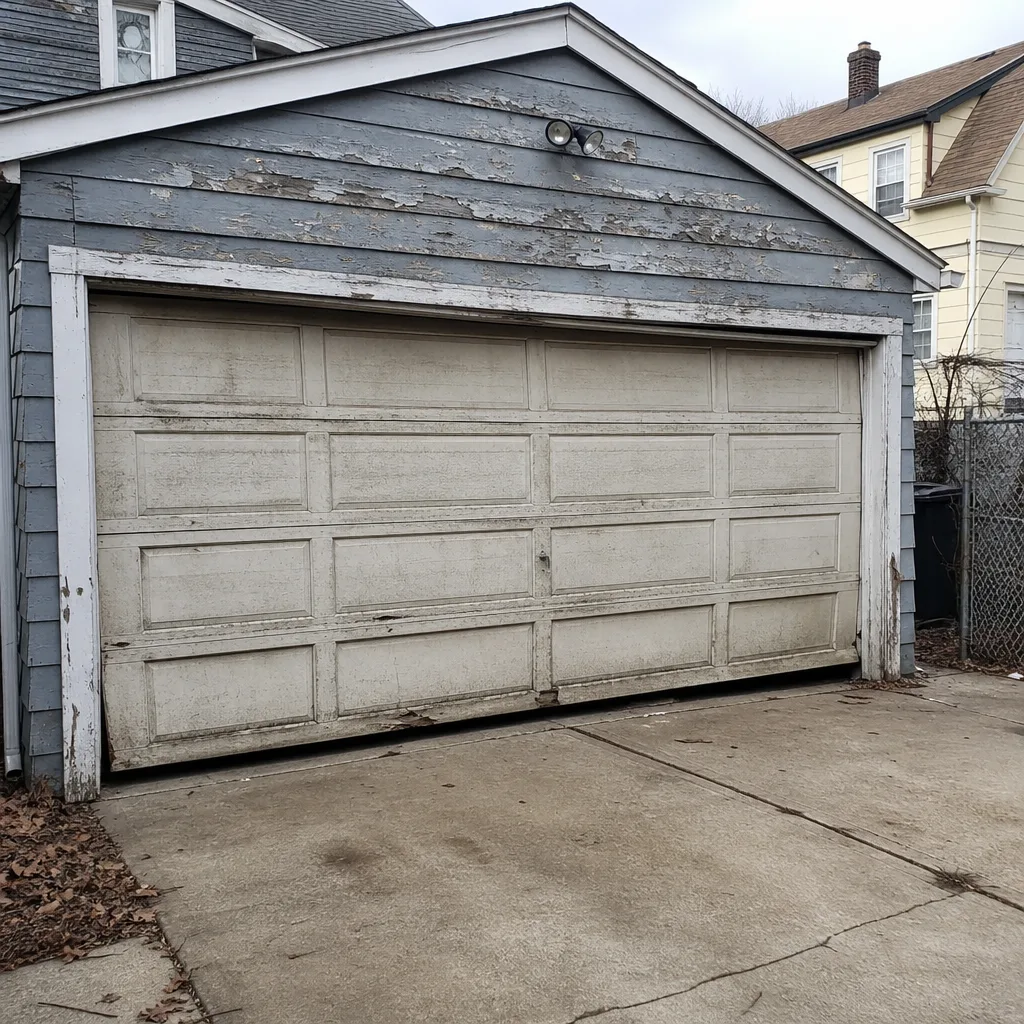 Before
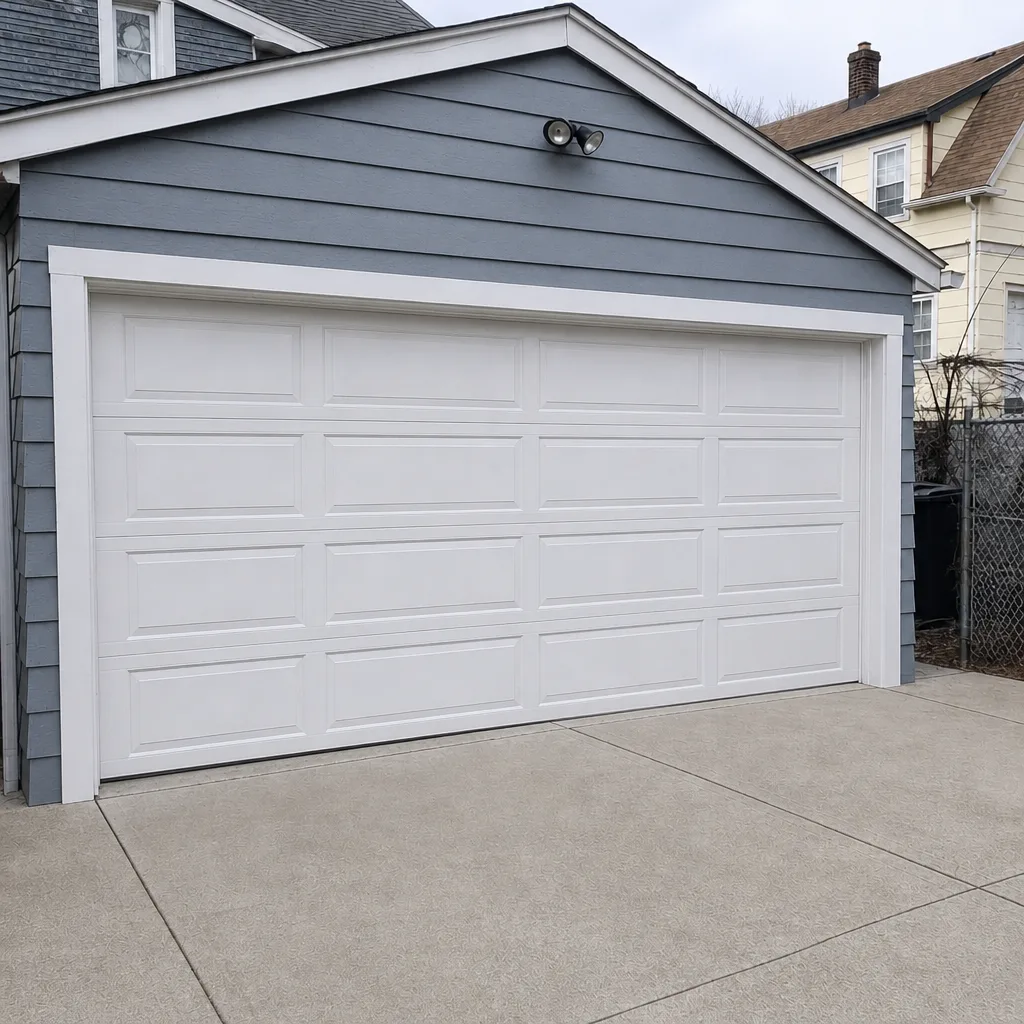 After
When to Call a Professional
Garage doors have a small number of jobs where a homeowner can safely check something, and a much larger number where a trained professional should step in. Springs, cables, bottom brackets, and opener internals are the professional-only bucket. If the door won’t stay up, won’t go down, has come off a track, or the opener is making sounds it didn’t make last month, we want to hear from you. Our technicians have up to 9 years of experience and specialize in the eight residential brands most common in Newark homes, from LiftMaster and Chamberlain openers to Clopay and Amarr doors. Our priority is getting your door moving safely the first time, not a replacement sale. Newark Garage Door Service offers free estimates in Newark – call (866) 942-6834. We answer 24/7. Fast dispatch from 7am to 7pm, Sunday through Friday.
Frequently Asked Questions
Pull the manual release cord hanging from the trolley above the door, and lift the door by hand. If the door lifts with even weight, you’re fine. If it feels heavy, the spring is broken and you need two people to lift it. Our technicians work on all the major brands in Newark homes – LiftMaster, Chamberlain, Genie, and Craftsman among them – so we can diagnose the issue by phone and be set for a fast dispatch. Call (866) 942-6834 for an exact quote – estimates are free.
Many recent LiftMaster and Chamberlain models include battery backup from the factory, and a growing number of Genie models have it as an option. Older Craftsman units usually don’t. To confirm yours, check the model number on the head unit label and read the manual, or ask a technician to identify it during a service call. If you’re not sure, the manual release cord always works during a power outage.
Yes, with the manual release cord. The opener can’t run without power, but the door itself is not locked – pulling the release disconnects it from the opener, and you can lift it by hand. If your opener has battery backup, you can use the remote as normal for a limited number of cycles. Knowing the release cord location before the storm hits makes the difference.
Yes – our technicians are trained on the eight names we service most in Newark, and we send trained, insured professionals to every job. Our work focuses exclusively on garage doors and openers rather than being one item on a larger general-handyman list, which means the person at your door has spent their time on this trade. Call (866) 942-6834 for an exact quote – estimates are free.
Typical spring replacement in Newark runs in the low-to-mid hundreds of dollars per spring, and since springs are usually sold and replaced as pairs, expect the pair to run about twice that. The written estimate sets the exact price, and it’s given before any work starts – no surprises. If the door isn’t moving at all, call (866) 942-6834 for an exact quote – estimates are free.
No. The written estimate is the price, and you agree to it before any work starts. If we discover a related problem during the job – a cracked hinge or a worn cable – we’ll show it and give you the price to fix it before we proceed. You always have the right to say no to additional work. Call (866) 942-6834 for an exact quote – estimates are free.
The Bottom Line
Emergency preparedness for a Newark garage comes down to knowing three things before you need them: where your release cord is, what your opener model and spring type are, and what to do when the door won’t lift. Modern openers from LiftMaster and Chamberlain often have battery backup, and older units can sometimes be retrofitted. When a spring breaks or a cable fails, stop and call a trained professional – springs under tension are dangerous. Our team works on nearly every residential brand you’ll find in Newark, and when you need it, a garage door opener repair visit gets you back on track. You can also learn more about our work across Newark and our full range at Newark Garage Door Service. Free estimates. Call (866) 942-6834. We answer 24/7. Fast dispatch from 7am to 7pm, Sunday through Friday.
Written by the team at Newark Garage Door Service.