
Last updated November 14, 2026
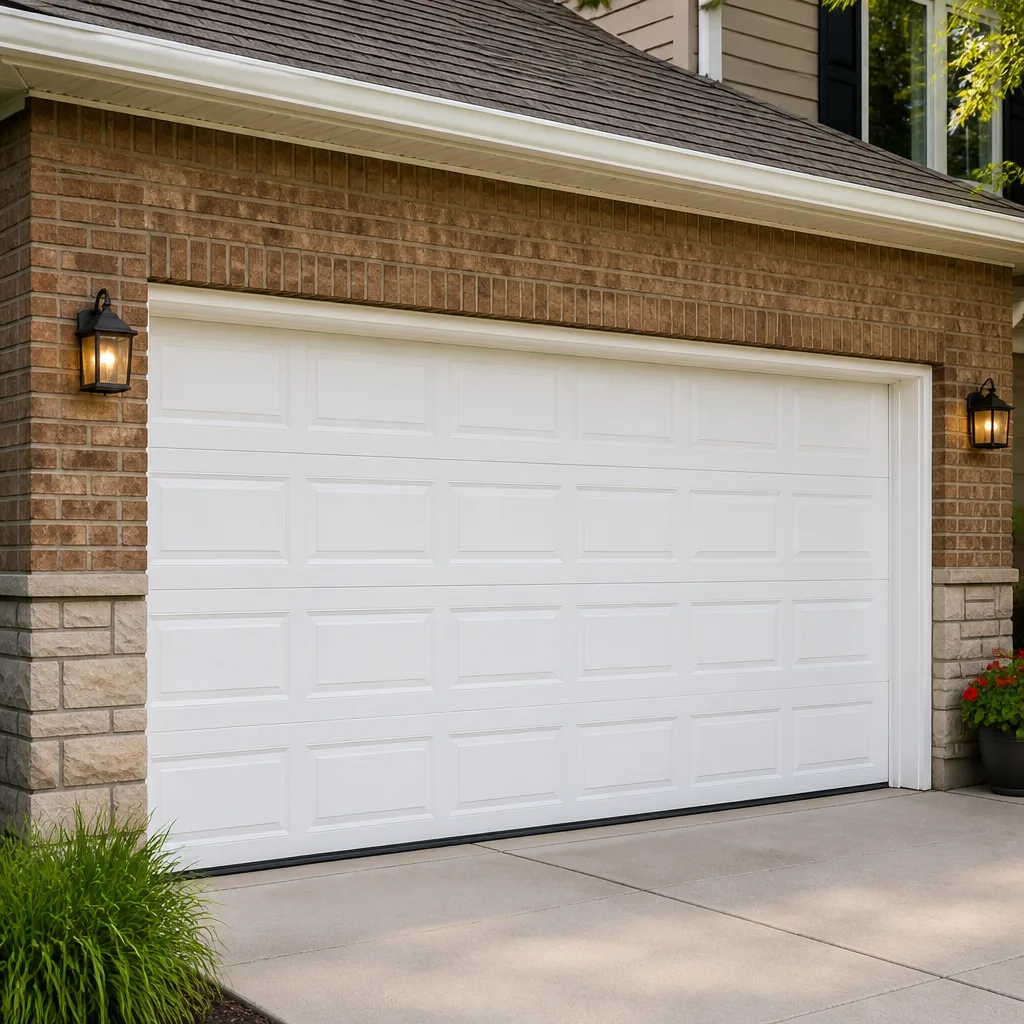 Raised-panel steel
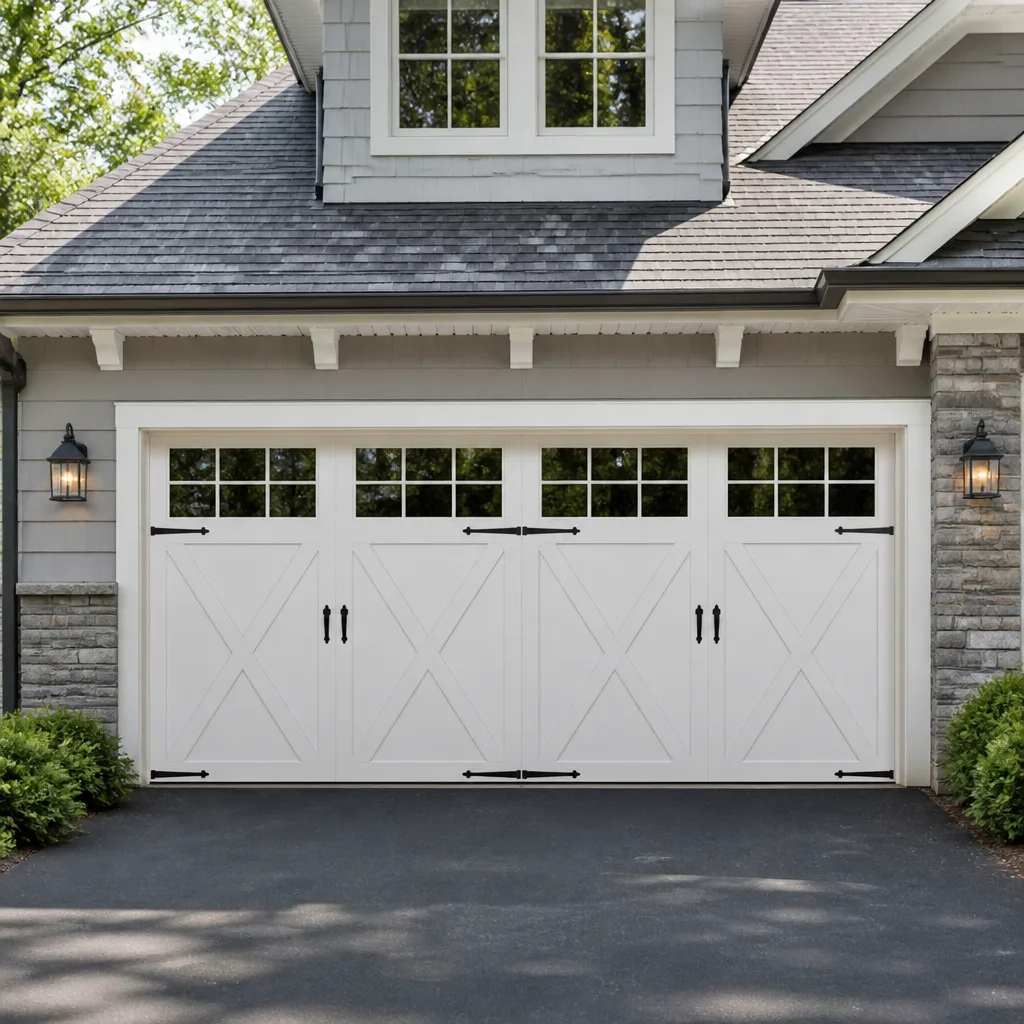 Carriage house
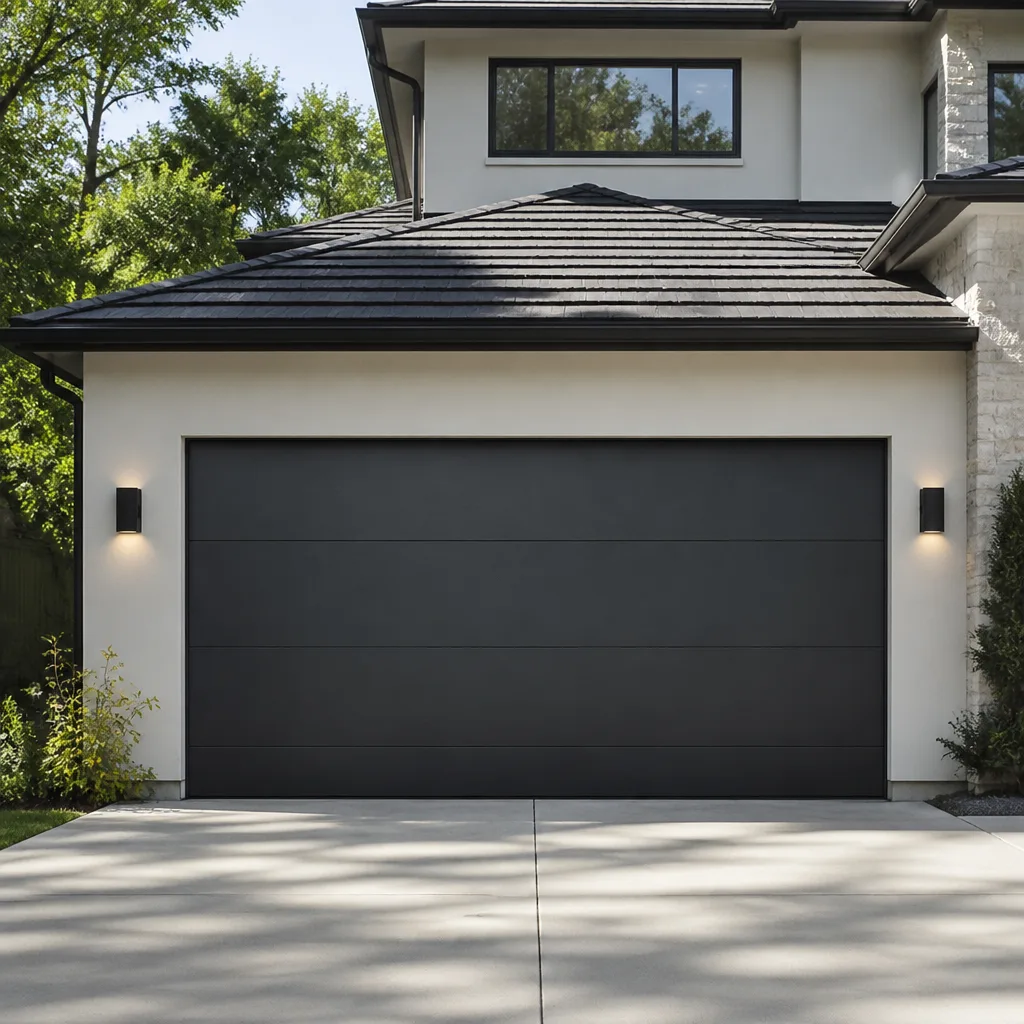 Modern flush
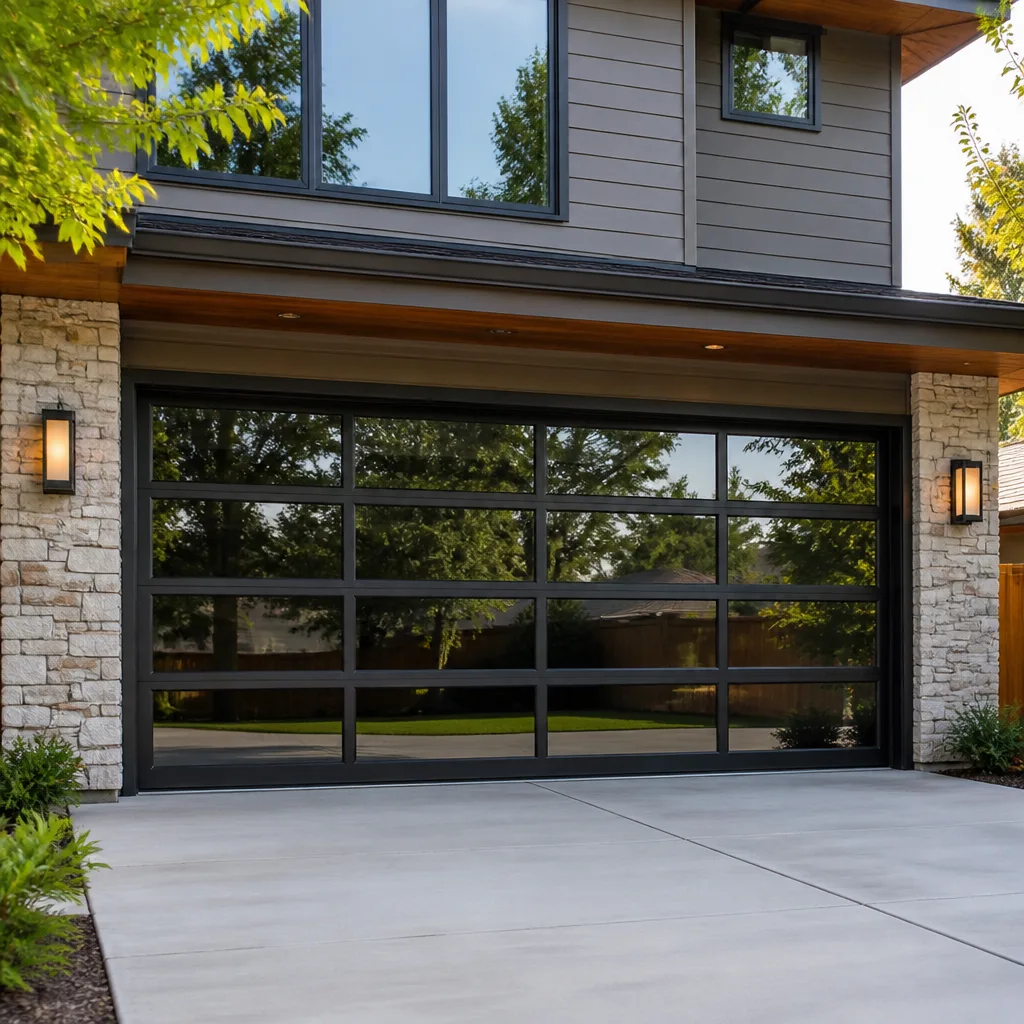 Full-view glass
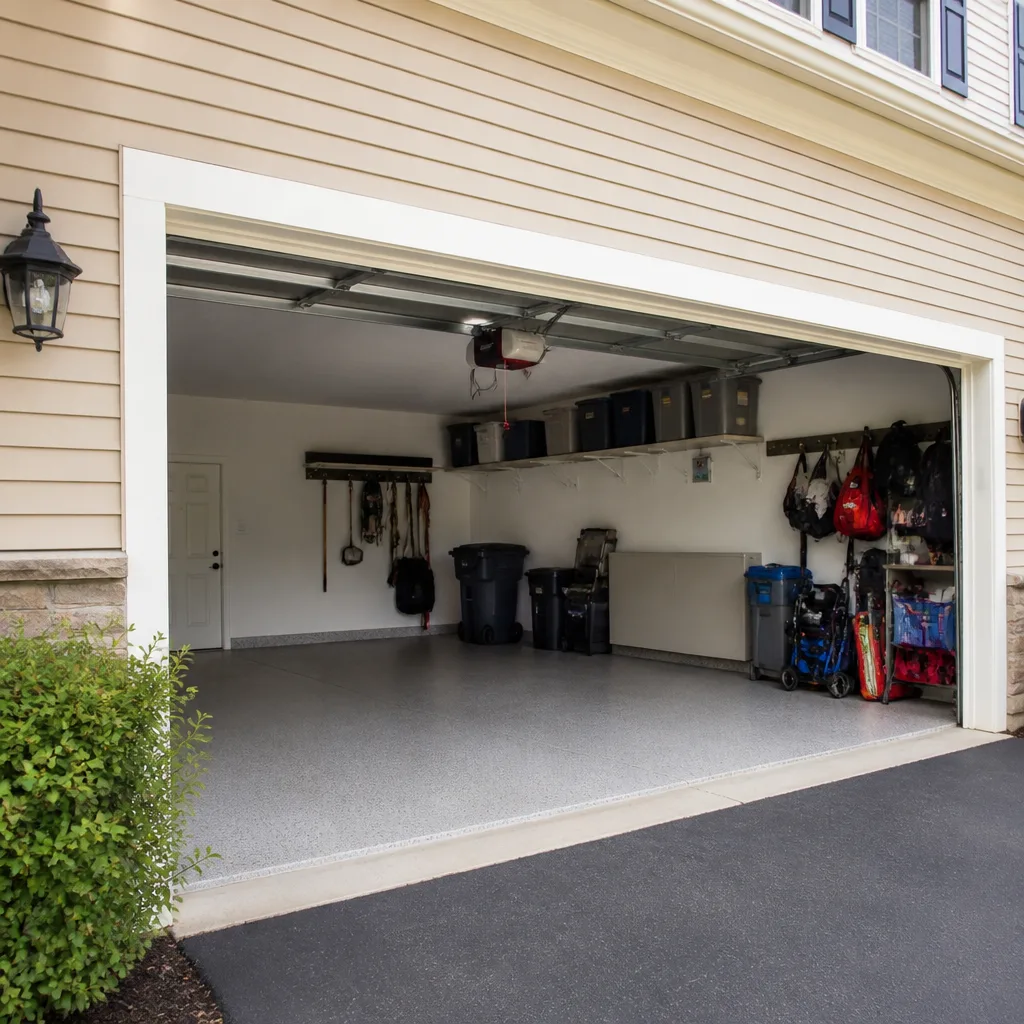 LiftMaster openers
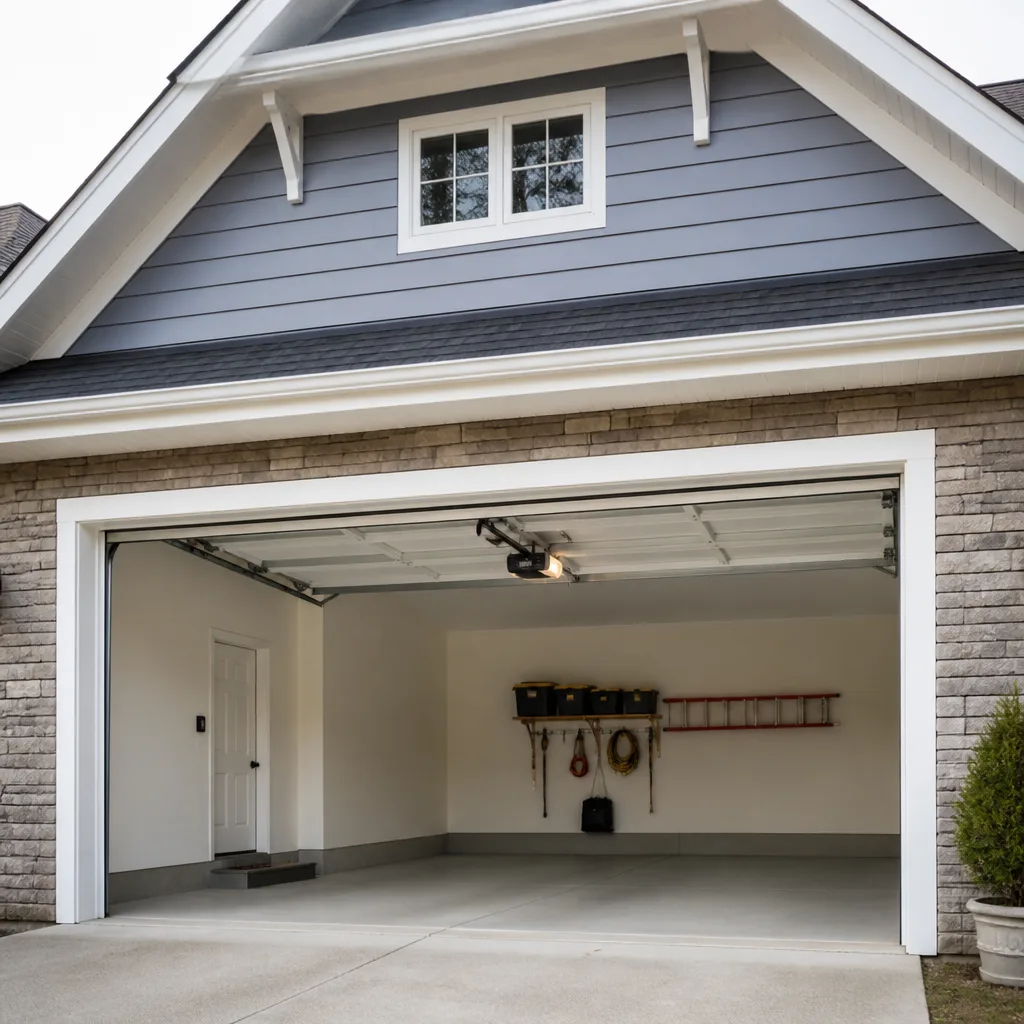 Chamberlain openers
Full 25-point door and opener safety check with every visit - springs, cables, rollers, tracks, and your LiftMaster or Chamberlain opener included
You get a price before we start. It does not change when the pro arrives.
Get your free estimateChoosing the Right Garage Door Brand: A Buyer’s Guide for Newark
The highest-rated garage door brand on national review sites earned that rating from homeowners in Phoenix and Charlotte, not from anyone dealing with Newark’s freeze-thaw cycles, summer humidity, and road salt. That’s the first thing to understand before you buy. A garage door in Newark lives a harder life than the same door three states away. Steel takes a beating when temperatures swing below freezing and back above it within a week. Paint chalks faster in humid summers. Bottom sections rust where road salt sits against them through February. This guide evaluates the major brands on the factors that decide whether you’ll still like your door in year ten: how the steel and finish hold up here, whether parts are actually in stock in Essex County, what insulation really does in a Newark garage, and how to read a warranty past year five.
Quick Answer
For most Newark homes, the right garage door brand is the one whose local distributor stocks replacement parts and whose panel construction fits your opening, not the one with the best consumer rating. Clopay, Amarr, Wayne Dalton, and Raynor are widely installed across Essex County and have reasonable parts availability through local suppliers. Insulation pays off in Newark only when the garage shares a wall or ceiling with living space. And the warranty matters less than the dealer who installs it.
Styles & brands we work with
- Raised-panel steel
- Carriage house
- Modern flush
- Full-view glass
- LiftMaster openers
- Chamberlain openers
Table of Contents
- How Newark’s Climate Tests a Garage Door
- Steel Gauge, Joints, and Finish: What Actually Fails
- Brand-by-Brand Parts Availability in Essex County
- The Insulation Reality Check for Newark Garages
- Decoding “Lifetime Limited” Warranties
- Matching Brand and Panel to Your Opening
- Openers: Why Brand Matching Matters
- Why the Installer Beats the Brand
How Newark’s Climate Tests a Garage Door
Newark sits in a climate that punishes garage doors in three distinct ways, and each one lands on a different part of the door. Understanding which stress hits which component tells you what to look for in a brand’s construction.
The first stress is freeze-thaw. Newark gets cold enough to freeze and warm enough to thaw repeatedly through winter. Water works into every seam, joint, and scratch, freezes, expands, and pries the material apart a little more each cycle. On a steel door, the vulnerable points are the joints between sections, the bottom edge where the door meets the threshold, and any spot where the paint film is broken. A brand that seals its section joints well and finishes its cut edges properly survives this. A brand that leaves bare steel at the bottom rail does not.
The second stress is summer humidity. Newark’s summers run humid, and that humidity attacks the paint and the hardware. A cheap paint finish chalks and fades within a few seasons. Hinges, rollers, and fasteners oxidize. The door’s structure is usually fine; it just looks tired, and the hardware starts to bind.
The third stress is road salt. In Newark, salt from winter roads gets tracked and splashed onto the lower panels and the bottom section. Salt accelerates corrosion on any bare or thinly finished metal. Where fasteners are steel rather than a corrosion-resistant alloy, they rust and seize. This is a small detail that separates brands with real longevity from brands that look fine for five years and then start showing rust at every hinge.
None of this is exotic. It’s the ordinary life of a garage door in a place with real seasons. But it means a door rated highly in a mild climate isn’t automatically the right door for a Newark garage. When we assess a door’s construction, we’re asking how it handles these three stresses specifically.
Steel Gauge, Joints, and Finish: What Actually Fails
Most residential garage doors in Newark are steel, and steel doors fail in predictable places. Knowing the failure points lets you compare brands on substance rather than marketing.
Steel gauge. Thinner steel dents more easily and flexes more over time. A door that flexes repeatedly at its hinges loosens its fasteners and starts to rattle. Heavier gauge steel holds its shape and resists the small hits that parking mishaps and yard tools deliver. Brand literature often lists gauge or steel thickness; if it doesn’t, ask. “24-gauge” or “25-gauge” with a clear thickness figure is more useful than a vague “heavy-duty steel.”
Section joints. This is where freeze-thaw does its worst work. Section joints are the horizontal seams between panels. A good joint has a positive interlock and a seal that sheds water. A poor joint traps water and lets it freeze between the sections, which is where rust starts and where sections begin to separate over time. Two-section and four-section doors handle this differently, and so do different brands.
Bottom section and bottom rail. The bottom of the door sits closest to the wet, salty ground. A brand that uses a thicker bottom section, a proper bottom seal, and a corrosion-resistant bottom rail gives you years more before rust shows. This is the single most weather-exposed part of any door.
Paint finish. Factory-applied finishes vary in quality. A good finish bonds tightly to the steel and resists chalking. A cheap finish gives up after a few summers of Newark humidity. Some brands offer a finish with a warranty against fading and rust-through; that’s a meaningful distinction, though read the pro-rating carefully (more on that below).
Hardware and fasteners. Hinges, brackets, and fasteners that corrode will seize and make the door stiff and noisy. Corrosion-resistant hardware matters in a salt environment. It’s a small line item that dramatically affects how the door operates in year eight.
When you compare Clopay, Amarr, Wayne Dalton, and Raynor side by side, ask about these five things directly. The brand with honest answers and specific construction details on the joint, the bottom rail, and the finish is usually the brand that lasts. The brand with only a pretty brochure and a vague “premium steel” claim is the one we’d press for details.
Brand-by-Brand Parts Availability in Essex County
Here’s the question that almost nobody thinks about until a torsion spring snaps or a roller seizes: when this door needs a part, how long will it be sitting open while we wait? A door brand’s reputation means little if the replacement panel or hinge has to ship from three states away.
In the Newark and Essex County market, parts availability splits roughly into two groups. The brands with local or regional distributor stock tend to be the ones most widely installed here, because installers choose brands they can service. That’s not a coincidence. Clopay and Amarr, for instance, are common enough across Essex County that replacement panels, hinges, and rollers are generally obtainable without a multi-week wait. Wayne Dalton and Raynor are also widely installed in the area, though specific component availability depends on the model and the distributor’s current stock.
What this means in practice:
- Common brands, common models: a replacement spring, hinge, roller, or even a single damaged panel is usually a fast turnaround because the part is stocked regionally.
- Common brand, discontinued model: panels can become hard to source, and you may face a choice between a mismatched panel and a new door.
- Less common brand: parts may be special order, and the wait can stretch. For a door that’s stuck open, that wait is measured in days, not hours.
- Openers, separately: opener parts are their own supply chain. LiftMaster, Chamberlain, and Genie parts are broadly available because those openers are everywhere.
This is why brand-fluent technicians matter. When we look at your opener and recognize it as a LiftMaster or a Genie, we know the drive system, the common failure points, and the part that’s likely on the shelf. That knowledge is what keeps a repair from turning into a two-week wait. For the door itself, our garage door repair service is built around matching parts to the system you already own rather than steering you toward a replacement sale.
If you want a fast, direct line to ask whether your specific brand and model can be serviced, call (866) 942-6834. We answer 24/7.
The Insulation Reality Check for Newark Garages
Insulated garage doors sell well and sometimes deliver real value. In a lot of Newark garages, though, they don’t, and it’s worth understanding why before you pay a premium for thermal performance.
Insulation in a garage door only helps when the garage is part of the building’s conditioned envelope. That means the garage shares a heated wall or ceiling with the living space, or the garage itself is conditioned. In those cases an insulated door reduces heat loss and keeps the garage more comfortable. It can matter if you use the garage for a workshop or if a bedroom sits directly above it.
In a typical detached or semi-detached Newark garage, the garage is not conditioned. It’s cold in winter and hot in summer no matter what door you hang. An insulated door in that situation still improves the door’s rigidity and quiet operation, and it can help the door feel sturdier, but it doesn’t do much for the temperature of your living space. The heat savings don’t reach the house because the garage isn’t connected to it. Spending extra for R-value on an uninsulated, detached garage is money spent on a number that never pays you back.
So before you compare R-values across brands, honestly assess your garage:
- Does the garage share a wall or ceiling with heated living space?
- Is there a room, bedroom, or living area directly above the garage?
- Do you actually spend time in the garage in cold or hot weather?
- Is the garage door itself the weak point, or are the walls and the man-door the real leaks?
If you answered yes to the first or second question, an insulated door is worth considering for the thermal benefit. If your garage is standalone and unheated, buy for durability, quiet, and finish quality, and treat the insulation as a nice-to-have for rigidity, not a heating bill saver. When we review your setup we’ll tell you which category your garage falls into before you commit to a premium door.
Decoding “Lifetime Limited” Warranties
“Lifetime limited” is one of the most misunderstood phrases in garage door shopping. Read the term and you’ll understand why it doesn’t mean what the words suggest.
Most garage door warranties split their coverage across parts and finish, and each part has its own terms. A door might carry a “limited lifetime” warranty on sections, but a shorter, defined term on hardware, springs, and finish. The word “limited” is doing the heavy lifting, and the details live in the fine print.
The part that catches people is pro-rating. A pro-rated warranty means the coverage declines over time. In year one, the manufacturer might cover replacement in full. By year ten, the coverage may be a fraction of the original value, and you pay the rest. So a “lifetime limited” warranty on a section may actually cover very little material cost after year five or six, even though the term runs for “lifetime.” Read the schedule that shows how coverage declines by year.
For Clopay, Wayne Dalton, Amarr, and Raynor, the specific terms vary by product line, so the manufacturer’s written warranty for your exact model is the only reliable source. In practice, focus on these four questions:
- Which components have separate, shorter warranties? Springs, rollers, and hardware usually do.
- How does coverage decline year by year? A pro-rating schedule tells you what you’ll actually get at year five, seven, and ten.
- What’s excluded? Most warranties exclude labor, and many exclude corrosion from salt or chemical exposure, which matters in Newark.
- Who honors it, the manufacturer or the installer? Manufacturer warranty protects the parts. The installer’s workmanship guarantee protects the installation.
The installation is where a lot of warranty frustration gets resolved. A door that squeaks, sags, or binds because of a poor install is a workmanship issue, not a manufacturer defect, and no brand’s warranty will cover it. That’s why the next section matters more than the warranty page.
Matching Brand and Panel to Your Opening
Two houses on the same block can need different doors because the openings differ. Brand selection for a Newark garage door has to account for the opening itself: headroom, side room, and the structure above. Get this wrong and you’ll buy a good door that fits badly.
Single-car garages with low headroom. Many older Newark single-car garages have limited headroom, which constrains how the door travels and how the openers mount. Low-headroom situations call for specific track and hardware configurations. A brand that offers low-headroom hardware for its doors is a real advantage here, because it means the door can be installed without the track grabbing your ceiling. If the previous door needed a special setup, note that before you buy the replacement.
Double-car garages with side-room constraints. Double-car openings are common across Newark, but side room (the wall space beside the door, where the track needs to be anchored) can be tight in attached garages. A door that needs generous side room may not fit the way the old one did. Standard double-car widths are straightforward, but sizing and track configuration vary, and brands differ in how flexible their track options are.
Carriage-house style on converted detached garages. Some Newark detached garages have been converted or updated, and here a carriage-house or decorative panel door can look great, but the panel construction and weight are heavier. Heavier doors demand heavier springs, stronger tracks, and openers rated for the weight. The decorative door that looks good on the showroom floor can overwork a standard opener if it isn’t sized correctly.
The practical rule: pick the door after you understand the opening. Headroom, side room, and the load above the door determine what will actually fit and operate well. A brand with flexible options fits more situations. A brand with rigid sizing may look perfect on paper and fight you on install day. Our garage door installation service starts with measuring the opening for exactly this reason.
Openers: Why Brand Matching Matters
The opener is the part most people forget when they think about a “garage door brand.” But a door is only as good as the opener that lifts it, and opener brands have their own parts markets, failure points, and compatibility quirks.
LiftMaster, Chamberlain, and Genie are the openers you’ll see most often in Newark garages, and for good reason. They’re broadly installed, which means parts and knowledge for them are broadly available. When an opener fails, the diagnostic path is different for each family:
- Motor and drive: a dead motor or a stripped drive gear is a mechanical failure and needs the right replacement part for that model.
- Remotes and safety sensors: often a pairing or alignment issue rather than a hard failure.
- Smart-home components: Wi-Fi and app-based openers introduce their own connectivity and firmware issues that are specific to the brand and model.
This is why we treat garage door opener repair as its own discipline rather than a footnote. An opener problem isn’t always a door problem, and a technician who knows LiftMaster, Chamberlain, and Genie systems reads the symptoms faster and knows what part to bring.
How do you know whether it’s the door or the opener? A few signs point one way or the other:
- The opener runs but the door doesn’t move: likely the door (spring, cable, or track) or the opener’s drive linkage.
- The opener doesn’t respond at all: likely the opener (power, motor, or sensor).
- The door moves but reverses immediately: likely a sensor or force-setting issue.
- The door is stiff and the opener strains: likely the door, and the opener may be compensating for a mechanical issue.
If your opener is misbehaving, call (866) 942-6834. We answer 24/7, with fast dispatch from 7am to 7pm and free estimates.
Why the Installer Beats the Brand
Here’s the judgment that saves Newark homeowners the most trouble: the brand of door matters, but the quality of the installation matters more.
A premium door installed badly will squeak, sag, and bind within a season. The springs may be sized wrong, the track may be misaligned, the reinforcement may be missing, and the safety reverse may not be tuned. None of that is the brand’s fault, and none of it is covered by the manufacturer’s warranty. Conversely, a mid-tier door installed correctly, with the right springs for its weight and the track properly set, will operate smoothly and quietly for years. The installation is where the door’s real performance is decided.
The same logic applies to parts. A brand-fluent technician installs the correct part the first time, sized to your door’s weight and model. A generalist who adds garage doors to a long service list may order the wrong spring, the wrong hinge, or the wrong roller, and you’re back to square one. Our technicians have up to 9 years of experience, and because garage doors are all they do, the diagnosis is faster and the parts fit the first time.
We work on the brands you’ll actually find in Newark, which matters when your door is one of the widely installed ones. See the full range of what we handle at Newark Garage Door Service. The other half of the equation is where you live, and our Newark page covers the local market and service area.
Common Mistakes to Avoid
- Choosing by national review score alone. A door rated highly by homeowners in mild climates may not hold up to Newark’s freeze-thaw cycles and road salt. Check the steel gauge, the joint seals, and the bottom rail before trusting a star rating.
- Buying the door before measuring the opening. Headroom and side room decide which doors will actually fit and operate well. Measure first, then shop.
- Paying for insulation you can’t use. If your garage is detached and unheated, an insulated door’s thermal benefit never reaches your living space. Buy for durability and quiet instead.
- Reading “lifetime limited” as full lifetime coverage. Pro-rating cuts coverage dramatically after year five. Ask for the decline schedule before you buy.
- Ignoring parts availability. A beautiful door in a brand with no local parts stock can leave you waiting days for a replacement panel after a small hit. Ask your installer which brands they can source quickly in Essex County.
- Skipping the opener. A heavy or damaged door on an underpowered opener strains the motor and the door. Size the opener for the door, and repair opener faults as their own problem instead of replacing the whole system.
- Letting a generalist install a specialist’s job. An installer who does garage doors as a side offering may size springs wrong or misalign the track. The warranty won’t cover it, and you’ll pay twice.
See the difference
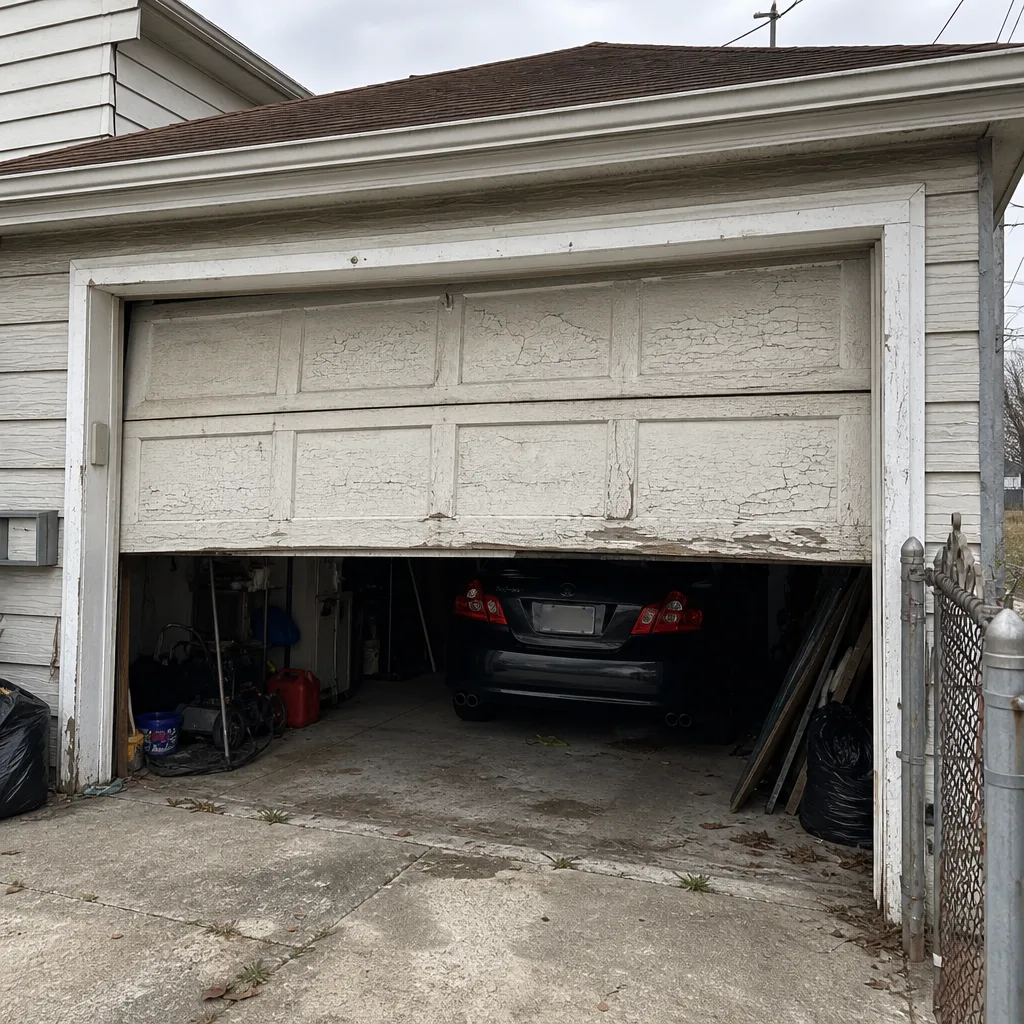 Before
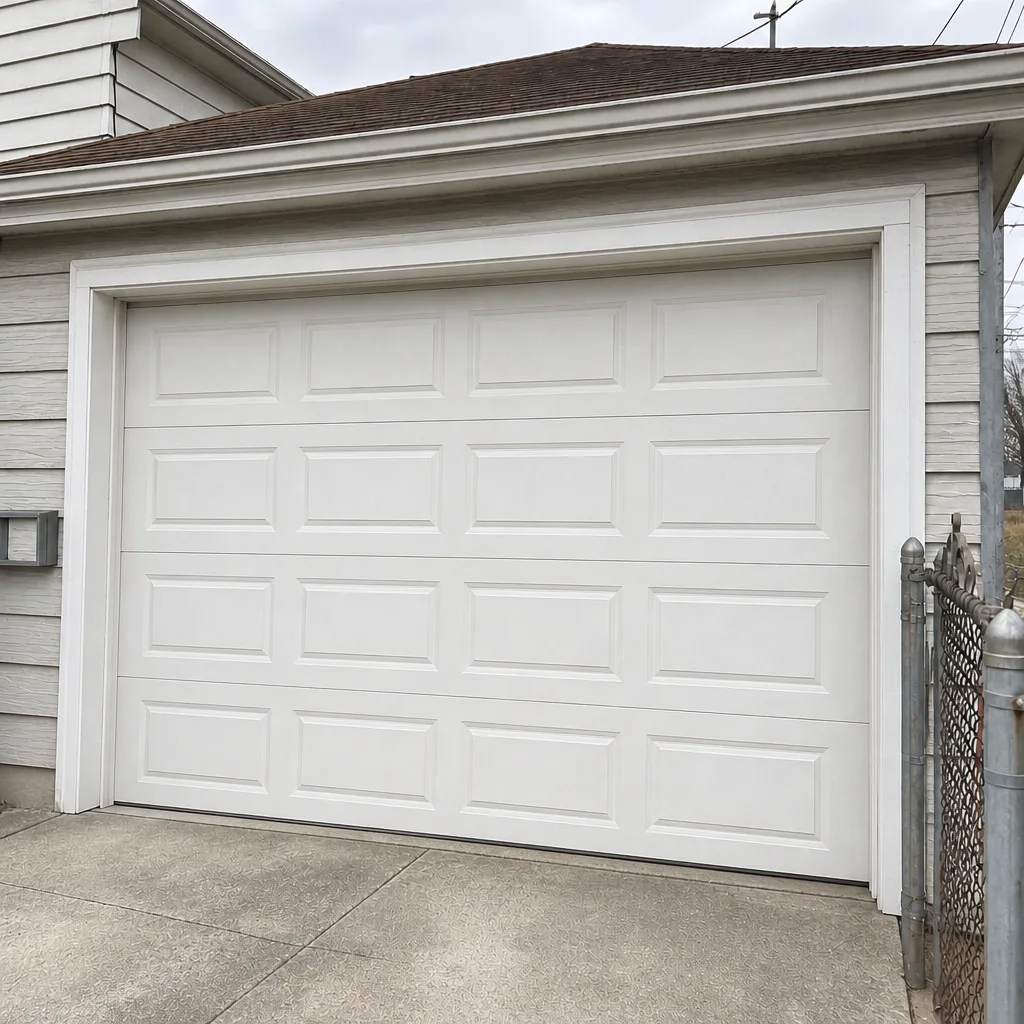 After
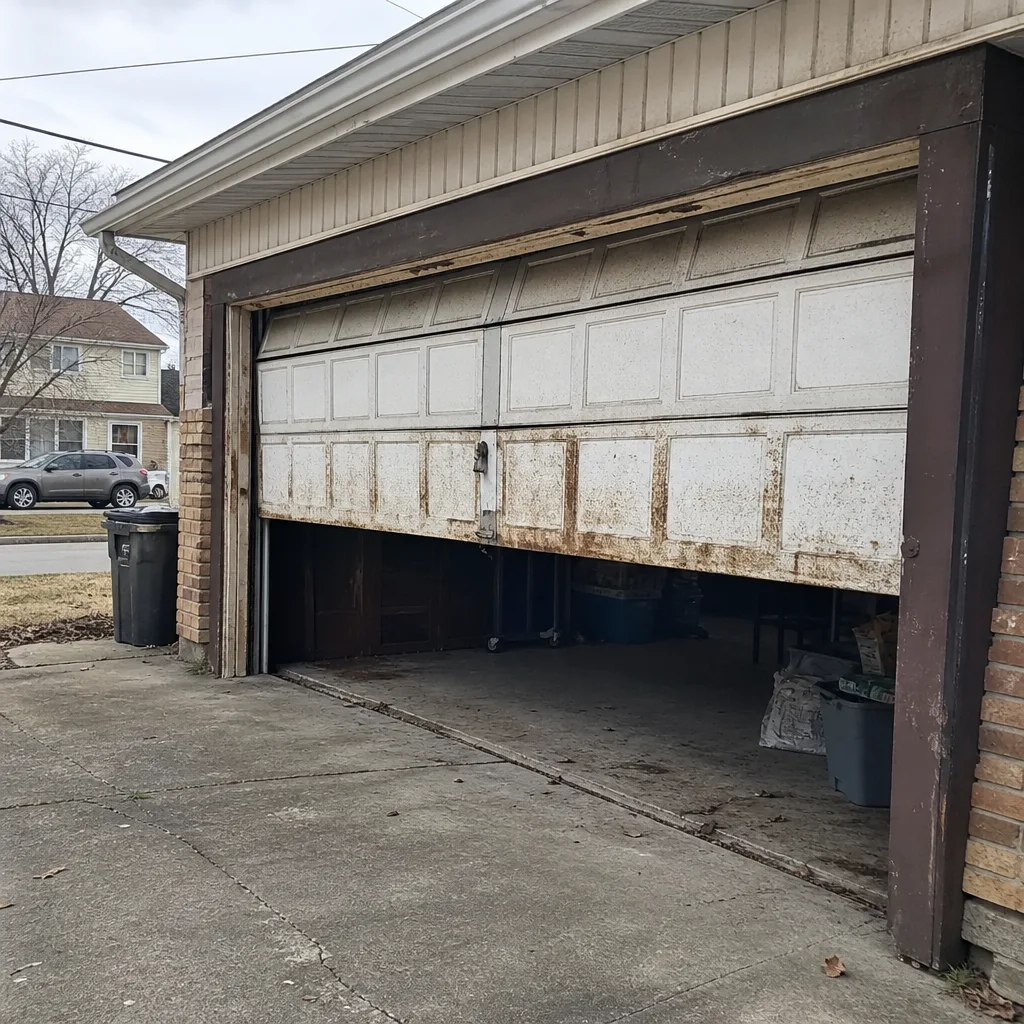 Before
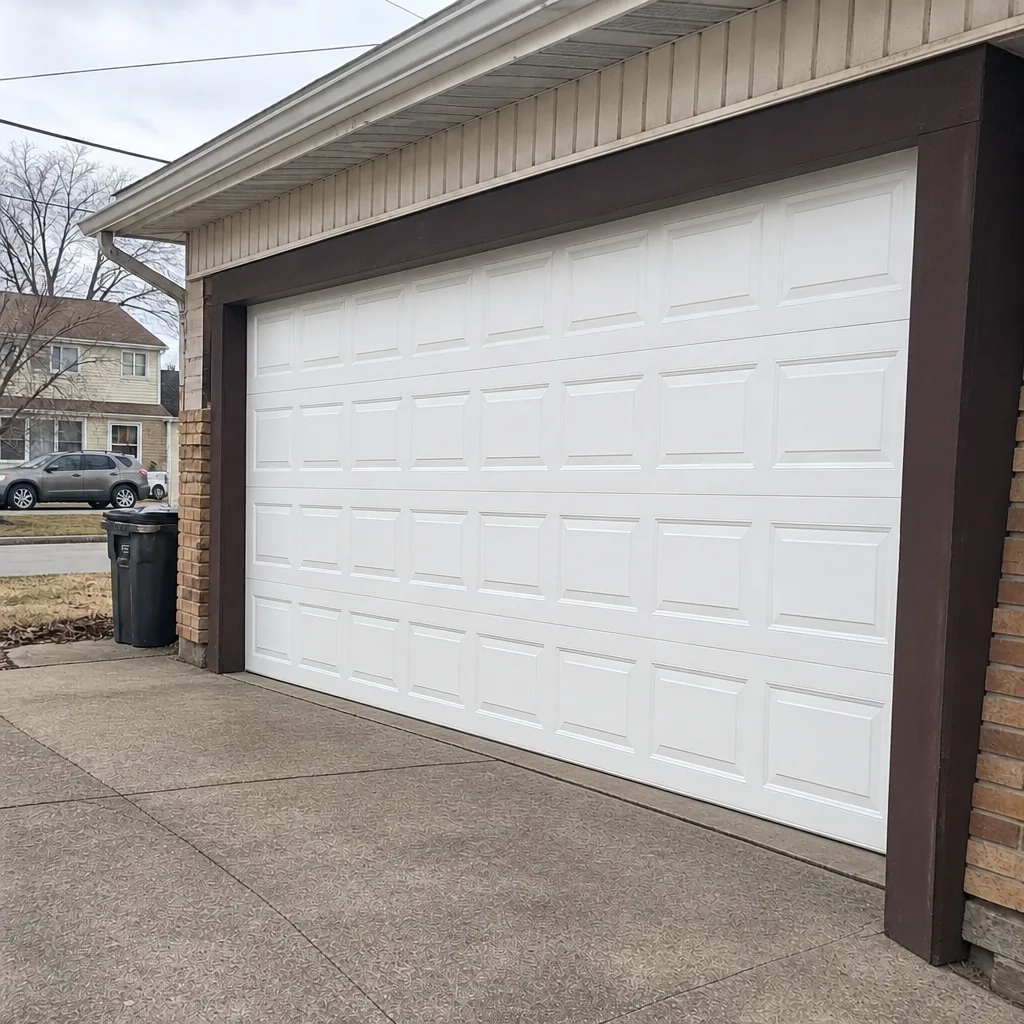 After
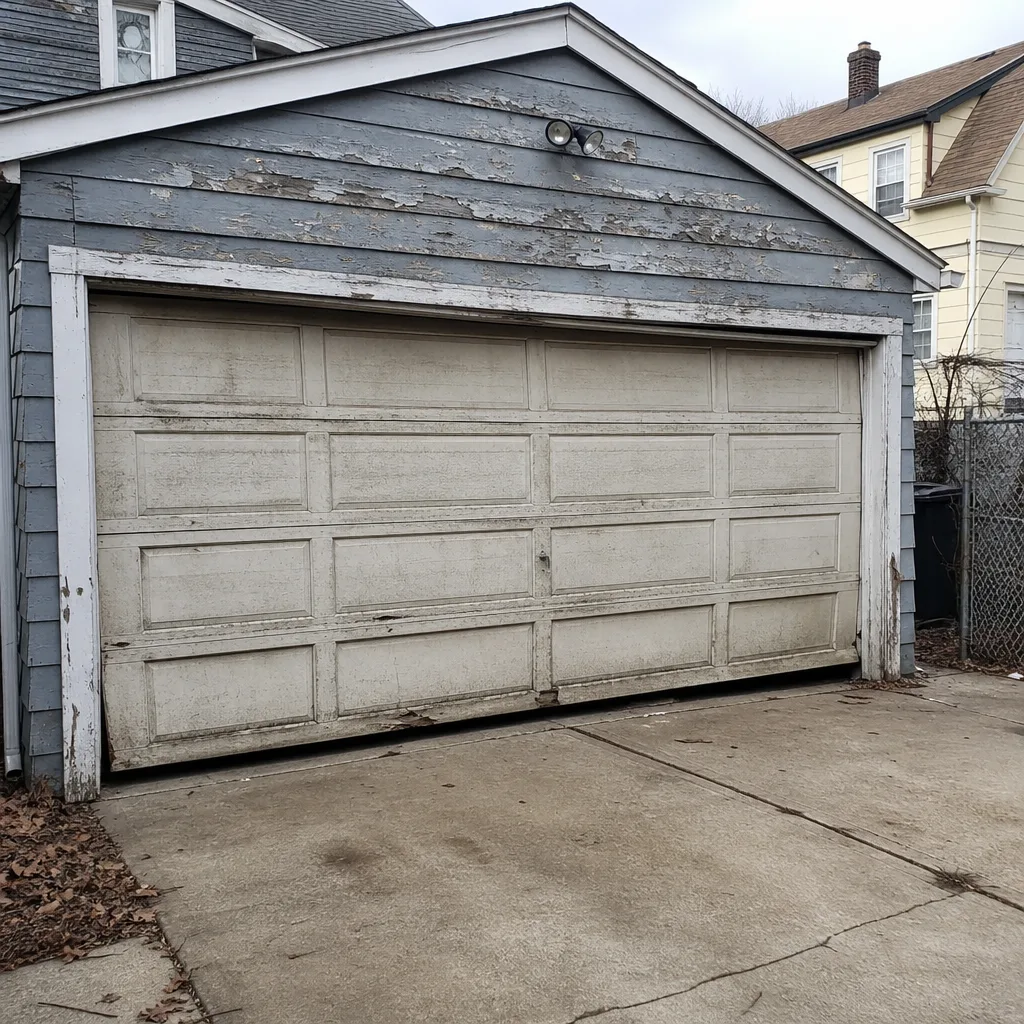 Before
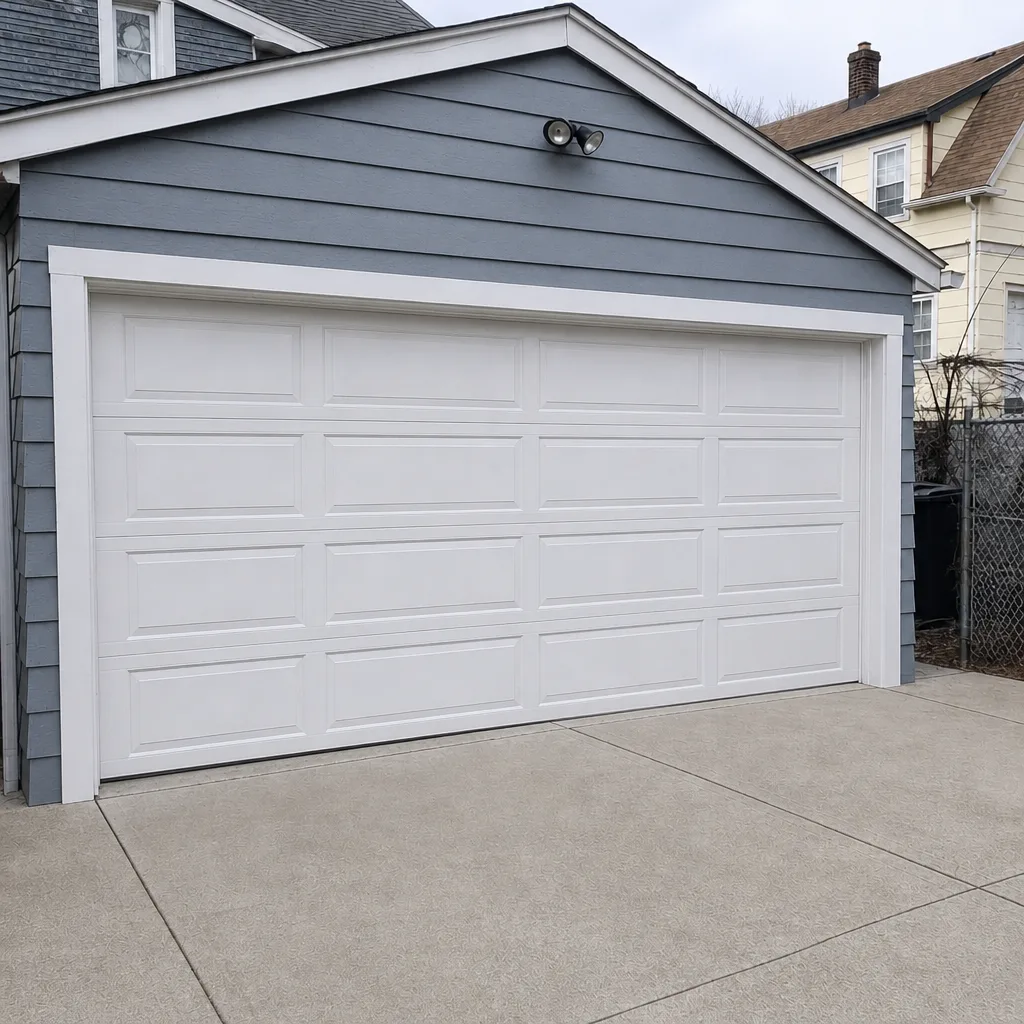 After
When to Call a Professional
Some garage door issues are clearly a call-a-professional situation, and that’s usually the point where a homeowner is standing in the driveway wondering what went wrong. A snapped torsion spring, a cable that’s come off its drum, a door that’s come off its track, or a door that goes up crooked all involve high-tension parts and heavy equipment. Springs and cables are under extreme tension and can cause serious injury if handled with anything less than the right tools and training. Don’t attempt those yourself.
Opener faults that don’t resolve with simple remote pairing or sensor alignment, doors that reverse unpredictably, and doors that are stiff or noisy are also worth a professional diagnosis. Newark Garage Door Service offers free estimates in Newark. Call (866) 942-6834, and we’ll come out to diagnose the problem and give you a written price before any work starts.
Frequently Asked Questions
For most Newark homes, the best brand is the one whose construction handles freeze-thaw and road salt and whose parts are stocked locally. Clopay, Amarr, Wayne Dalton, and Raynor are widely installed and serviced across Essex County. The right choice depends on your opening’s headroom and side room, whether the garage is heated, and how easily your installer can service the brand. Call (866) 942-6834 for an exact quote, and estimates are free.
You need one only if your garage shares a heated wall or ceiling with living space. In a detached, unheated Newark garage, the insulation’s thermal benefit never reaches the house, so the extra cost buys rigidity and quiet rather than a lower heating bill. Assess your garage honestly before paying the premium. Call (866) 942-6834 and we’ll help you decide.
It means the term length is long but the coverage is limited, and it’s usually pro-rated. After year five or so, coverage on sections and hardware often declines to a fraction of the original value, so you pay most of a replacement cost. Ask for the year-by-year schedule. Call (866) 942-6834 for help reading a warranty before you buy.
We’re equipped on eight widely installed brands: LiftMaster, Chamberlain, Genie, Clopay, Amarr, Wayne Dalton, Craftsman, and Raynor. Most Newark garages have one of these, and parts availability is usually the deciding factor. Same-day service depends on the part and the day. Call (866) 942-6834; we answer 24/7, with fast dispatch from 7am to 7pm.
The written estimate sets the final price, so the number you agree to before any work starts is the number you pay. We diagnose first, then quote. Call (866) 942-6834 for a free estimate.
Our technicians are trained on the brands they service, and we stand behind our work with a satisfaction guarantee. We work with independent local professionals, and our team focuses only on garage doors, not the full checklist a handyman carries. Call (866) 942-6834 with any questions.
The Bottom Line
Choosing a garage door brand for a Newark home comes down to four things: how the door handles freeze-thaw, humidity, and road salt; whether parts are stocked locally in Essex County; whether you actually need insulation for your garage’s configuration; and whether the installer is a garage door specialist. The national review score tells you less than these four factors. Match your opening’s headroom and side room, read the pro-rating schedule before trusting a “lifetime limited” warranty, and put the installation in the hands of someone who does it every day. Get those right and the brand name is a detail.
Ready to sort out your door or opener? Call Newark Garage Door Service at (866) 942-6834 for a free estimate. We answer 24/7, with fast dispatch from 7am to 7pm, Sunday through Friday. Our technicians have up to 9 years of experience, and we handle repair, opener service, and installation under one roof, so one call handles it.
Written by the team at Newark Garage Door Service.